Eugenics and the Genetics Society
By Alex Aylward, Daniel J. Fairbanks, Maria Kiladi, and Gregory Radick,
Heredity
| 04. 20. 2026
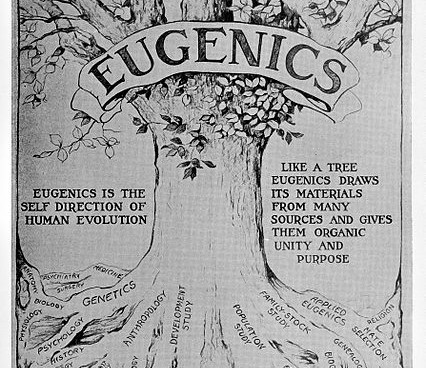
Genetics and eugenics co-evolved at the beginning of the twentieth century and remained associated through the 1940s and beyond. Early geneticists were far from unanimous in their views on eugenics; some avidly supported the movement, whereas others openly opposed it or chose to remain detached. Academic institutions and scientific societies are currently reckoning with their past associations with eugenics. This article highlights historical connections between the UK Genetics Society and the eugenics movement in Britain. The complexity of these connections is illustrated through case studies of three notable Genetics Society past Presidents—J. B. S. Haldane, R. A. Fisher, and L. S. Penrose—who represent diverse ways that British geneticists engaged with the eugenics movement, from career-long support to science-based opposition. Their contributions to, and critiques of, eugenics are situated in their scientific and historical contexts. We reflect on the historical role of professional genetics organisations in facilitating the rise of eugenics in the early twentieth century, and the present responsibility of the same organisations to combat its contemporary revival.
Introduction
In recent years, a number of universities and learned societies have...
Related Articles
By Charles Schmidt, Undark | 09.25.2026
In 2010, scientists at the University of Tokyo and other institutions reported a startling achievement: They had successfully grown a pancreas made almost entirely of rat cells within the bodies of mice. The research was directed by Hiromitsu Nakauchi, a...
By Rob Stein, NPR [cites CGS' Katie Hasson] | 09.29.2026
Cathy Tie slips on a white lab coat bearing her name and the logo of her startup: Origin Genomics. "Welcome!" she says as she leads an NPR reporter, photographer and videographer on an exclusive tour of Origin's labs located...
By Emily Baumgaertner Nunn, The New York Times | 09.08.2026
It is one of biology’s most ingenious rhythms: Every baby is born young. No matter how much wear and tear their parents’ DNA accumulated over their lifetimes, reproduction erases the molecular scars, handing a clean slate to the next generation...
What We Inherit by Sam Trejo and Daphne O. Martschenko; and Original Sin by Kathryn Paige Harden have a great deal in common, with substantial differences in style and emphasis. Both books attempt, in different ways, to show the reader just where current research into human genomics stands, where that might be going, and why the authors are interested. In short, the influence of genomic research on our societies is already large and seems likely to change them in ways...