Perspectives

Biopolitical Times
Each passing year, more people die who would be eligible for reparations after involuntary sterilization in California.
Biopolitical Times
There has been little-to-no discussion in the press or in scientific circles about whether deafness can be called a ‘serious’ condition.

Aggregated News

Ukraine has become an increasingly popular destination for foreign couples seeking affordable surrogacy services since they became legal in 2002. But as demand grows, so do reports of alleged exploitation of both surrogate mothers and intended parents. 

Aggregated News

Disabled lives are lives, and are charged with inherent dignity. Most people with disabilities don’t wish they had never been born. Some have rich lives despite their disability, but others would say they have rich lives at least in part because of their disability.
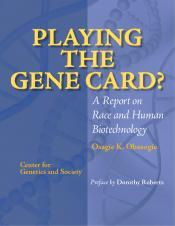
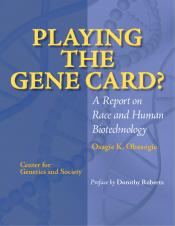
book cover

Playing the Gene Card?

We're now well into what some have called the "Biotech Century," and increasing numbers of DNA-based products are being promoted and sold.

While many have important benefits, some may be setting back our efforts toward racial justice. Playing the Gene Card? focuses on three biotech products that may have particular risks for African American and other minority communities:

  • Race-specific drugs
  • Genetic ancestry tests
  • DNA forensics and DNA databases

Press Release

Executive Summary [PDF]

Full Report [PDF]


Osagie Obasogie is available for interview. His recent appearances include Forum with Michael Krasny (KQED), The Jeff Farias Show, and The Cliff Kelley Show (WVON).


About the Author

Osagie Obasogie, JD, PhD, is Senior Fellow at the Center for Genetics and Society; Haas Distinguished Chair and Professor of Bioethics in the Joint Medical Program and School of Public Health at the University of California, Berkeley. Read more

UC Berkeley School of Public Health faculty page

Articles and commentary

Presentations and talks

Harriet discussed her experiences writing and talking about the increasingly powerful “medical-industrial complex,” the erosion of informed consent in biomedical research, and the ways that commercial dynamics have aggravated issues of distributive and social justice. She also describes the resistance she has encountered when writing about these topics, especially in response to her recently published book Deadly Monopolies: The Shocking Corporate Takeover of Life Itself--And the Consequences for Your Health and Our Medical Future. She addressed opportunities for scholars to engage more directly in communicating their ideas to broader audiences and the difficulties they may face in “going public.” And she pressed the case she makes in Deadly Monopolies for what Osagie Obasogie called, in a review of the book “a broader political consciousness of science and technology.