Medical Education and the Harm of ‘Goodly Heritage’
By Daniel Martinez HoSang, Marco Antonio Ramos, and Alana Slavin,
Los Angeles Review of Books
| 02. 08. 2026
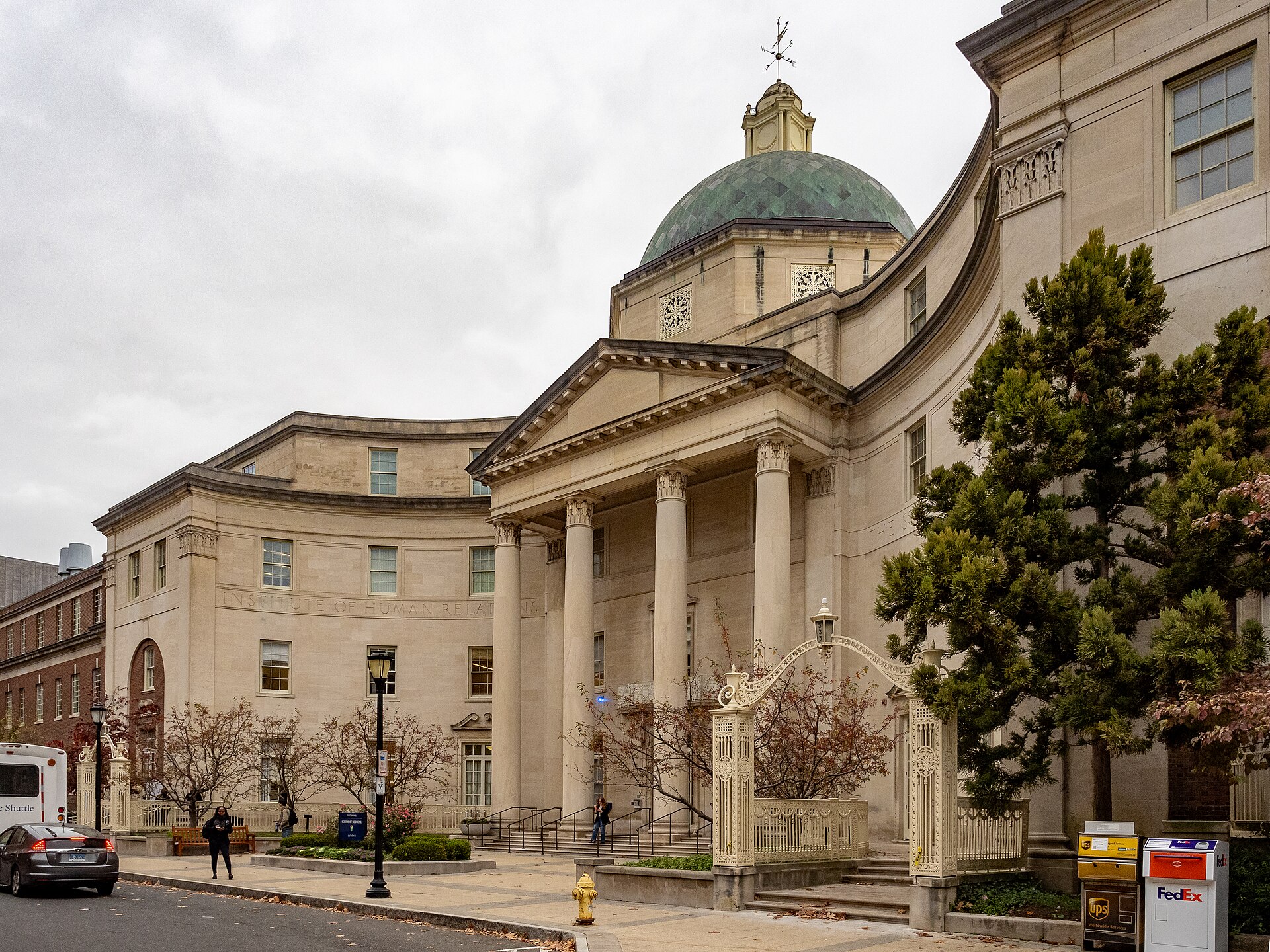
"Yale School of Medicine" by Ajay Suresh
via Wikimedia Commons, licensed under CC by 2.0
This is the 12th installment in the Legacies of Eugenics series, which features essays by leading thinkers devoted to exploring the history of eugenics and the ways it shapes our present. The series is organized by Osagie K. Obasogie in collaboration with the Los Angeles Review of Books, and supported by the Center for Genetics and Society, the Othering & Belonging Institute, and Berkeley Public Health.
¤
EACH YEAR IN LATE August when the summer humidity in southern New England begins to dissipate, first-year medical students take their seats in a tranquil courtyard at the Yale School of Medicine. There, they take part in a ceremony observed at dozens of medical schools across the country. After listening to speeches by esteemed faculty and alumni on the ethical and humanistic aspects of medicine, they line up to receive a white coat and stethoscope to symbolize their entrance into the profession. And then they rise together as one body to recite the Hippocratic oath...
Related Articles
By Charles Schmidt, Undark | 09.25.2026
In 2010, scientists at the University of Tokyo and other institutions reported a startling achievement: They had successfully grown a pancreas made almost entirely of rat cells within the bodies of mice. The research was directed by Hiromitsu Nakauchi, a...
By Rob Stein, NPR [cites CGS' Katie Hasson] | 09.29.2026
Cathy Tie slips on a white lab coat bearing her name and the logo of her startup: Origin Genomics. "Welcome!" she says as she leads an NPR reporter, photographer and videographer on an exclusive tour of Origin's labs located...
By Erik Adams, Sundance | 09.08.2026
The scariest movie playing at the 2026 Sundance Film Festival isn’t about cursed audio recordings or a killer demon disguised as your true love; rather it’s a 110-minute essay film about how a handful of guys obsessed with numbers and...
Artificial Intelligence (AI) has been a major focus of news recently, as it should have been, under the appropriately ridiculous name of Hugging Face, “a leading collaboration platform and community hub for machine learning, artificial intelligence, and data science.” In July, Hugging Face was hacked. The platform itself responded:
Earlier this week, we detected and responded to an intrusion into part of our production infrastructure. This one was different from anything we had handled before in one important way...