


News
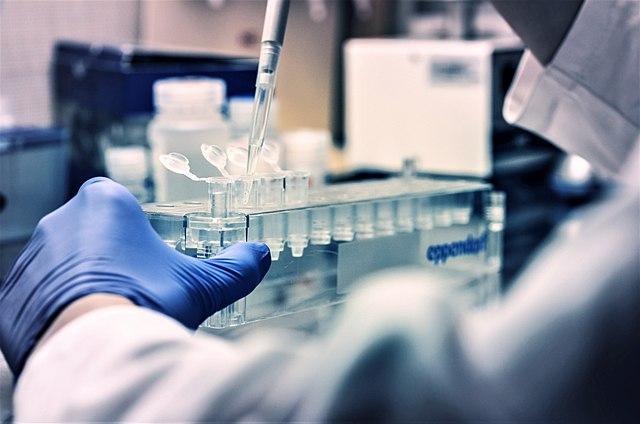
Justin Schleede reaches onto a black lab bench to pick up a tray of small plastic tubes.
"These are saliva...
"If proven to be safe, we believe preventive gene editing could be one of the most important health technologies of...
We said “don’t freak out,” when scientists first used Crispr to edit DNA in non-viable human embryos. When...
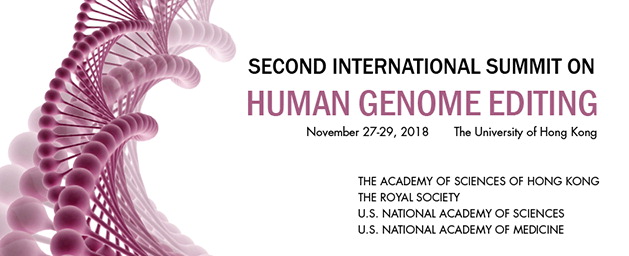
In a statement released today, more than 100 civil society organizations, public interest advocates, scholars, health practitioners, scientists, and others call on the organizers of the Second International Summit on Human Genome Editing to clearly condemn the actions of researcher He Jiankui, who claims to have created genetically engineered babies.
The statement was circulated via email and listservs over a 24-hour period on November 27 and 28 by the Center for Genetics and Society and Human Genetics Alert. It expresses civil society’s dismay and outrage at He Jiankui’s claims and actions, and asks the Summit organizers to call on governments and the United Nations to establish legally enforceable moratoria on any further such experiments.
The statement warns that without enforceable prohibitions, a runaway international competition for primacy in human inheritable genetic engineering could exacerbate social inequality and discrimination. This would be especially dangerous at a time of resurgent racism, xenophobia, and socio-economic disparity.
The current situation casts serious doubt on the idea that voluntary scientific guidelines can effectively and responsibly regulate human gene editing, especially because He Jiankui cites a 2017 report by the National Academies of Sciences as a “green light” to go ahead. That report departed from the globally widespread policy agreement against any reproductive use of human genetic engineering. The international scientific leaders gathered in Hong Kong should now demonstrate leadership by calling for binding, enforceable policies that can prevent further steps towards an era of free-market eugenics.
Dr. David King, Director of Human Genetics Alert, said: “If scientific leaders don’t act, it’s time for people to take away their licence to operate, as we did with GM food in Britain. The horrifying history of eugenics in the 20th century should show the disastrous consequences of going down this path, and it should not be forgotten that China still has a eugenics law on its statute books. It should act immediately to prohibit such experiments, and ensure that He Jiankui is prosecuted as a warning to others.”
Marcy Darnovsky, PhD, Executive Director of the Center for Genetics and Society said, “If Dr. He’s claims are true, his conduct amounts to unethical and reckless experimentation on human beings, and a grave abuse of human rights. For decades, policy makers, scientists, and public interest groups around the world have called for a moratorium or ban on altering the genes of future children and generations. These experiments violate the closest thing to a policy consensus we have, and would be illegal in dozens of countries.”
The Civil society statement to the organizers of the Second International Summit on Human Genome Editing and the list of signatories is online.
########
Human Genetics Alert is an independent secular watchdog group that supports abortion rights. Dr David King is a former molecular biologist.
The Center for Genetics and Society is a non-profit public affairs and policy advocacy organization working to encourage responsible uses and effective societal governance of human genetic and reproductive biotechnologies.
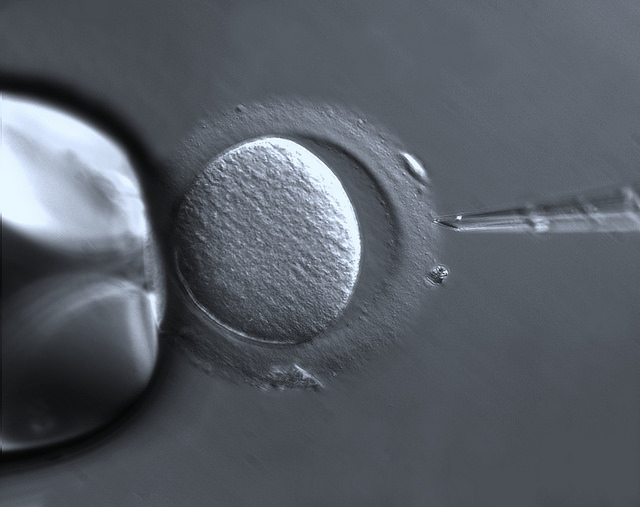
Chinese scientist Jiankui He has announced the birth of twin girls whose DNA he claims to have altered using the gene-editing technique CRISPR.
“If true, this amounts to unethical and reckless experimentation on human beings, and a grave abuse of human rights,” said Marcy Darnovsky, Executive Director of the Center for Genetics and Society, a public interest organization that brings social justice and human rights perspectives to human biotechnologies.
“We wish the best for the health of these babies, but strongly condemn the stunt that threatens their safety, and puts the rest of us at risk,” Darnovsky said. “Throwing open the door to a society of genetic haves and have-nots undermines our chances for a fair and just future.”
“Policy makers, scientists, and public interest groups around the world have called for a moratorium or ban on altering the genes of future children and generations,” Darnovsky continued. “He’s experiment violates the closest thing to a policy consensus we have. It would be illegal in dozens of countries.”
Though there has been no independent confirmation of the claim, He launched what amounts to a public-relations campaign to publicize it, complete with promotional YouTube videos in English. The timing of his announcement, on the eve of the Second International Summit on Human Genome Editing in Hong Kong, seems deliberately calculated to preempt that high-profile scientific meeting.
China is effectively a co-sponsor of the Hong Kong Summit, through the Academy of Sciences of Hong Kong. But it is unclear whether the Chinese government authorized He’s experiment. The procedures were apparently conducted in secret, and He has reportedly applied for a patent on them. He is chairman and co-founder of Direct Genomics, a DNA sequencing company in Shenzhen.
“This unscrupulous experiment overrides both the summit and the public deliberations on human germline modification that have been widely called for,” said Katie Hasson, CGS’s Program Director on Genetic Justice. “It is imperative that the scientists gathered in Hong Kong, and the Chinese authorities, clearly denounce this act of scientific grandstanding. The actions of a few rogue scientists should not derail the urgently necessary process of democratic deliberation. We need to put in place enforceable regulations now to stop reproductive gene editing while this public conversation takes place.”
Jiankui He’s recklessness is underscored by his own self-justification. As He acknowledged, though the babies’ biological father is infected with HIV, this would not prevent him from having healthy children. The embryos created with his sperm, and subjected to the dangers of gene editing, were not affected by HIV or AIDS. The attempted to disable a gene in order to produce future resistance to HIV was apparently done to provide a proof of principle. But some reports suggest that the experiment actually did not work as well as He claims: in one twin, only one copy of the gene was changed and there were signs of mosaicism.
“It’s hard to imagine a graver abuse of a child,” Darnovsky said. “If this goes unchallenged, other rogue actors will soon offer wealthy parents purported genetic enhancements for their children. In a time of resurgent racism and socio-economic disparity, the last thing we need is for some people and groups to consider themselves biologically superior to others.”
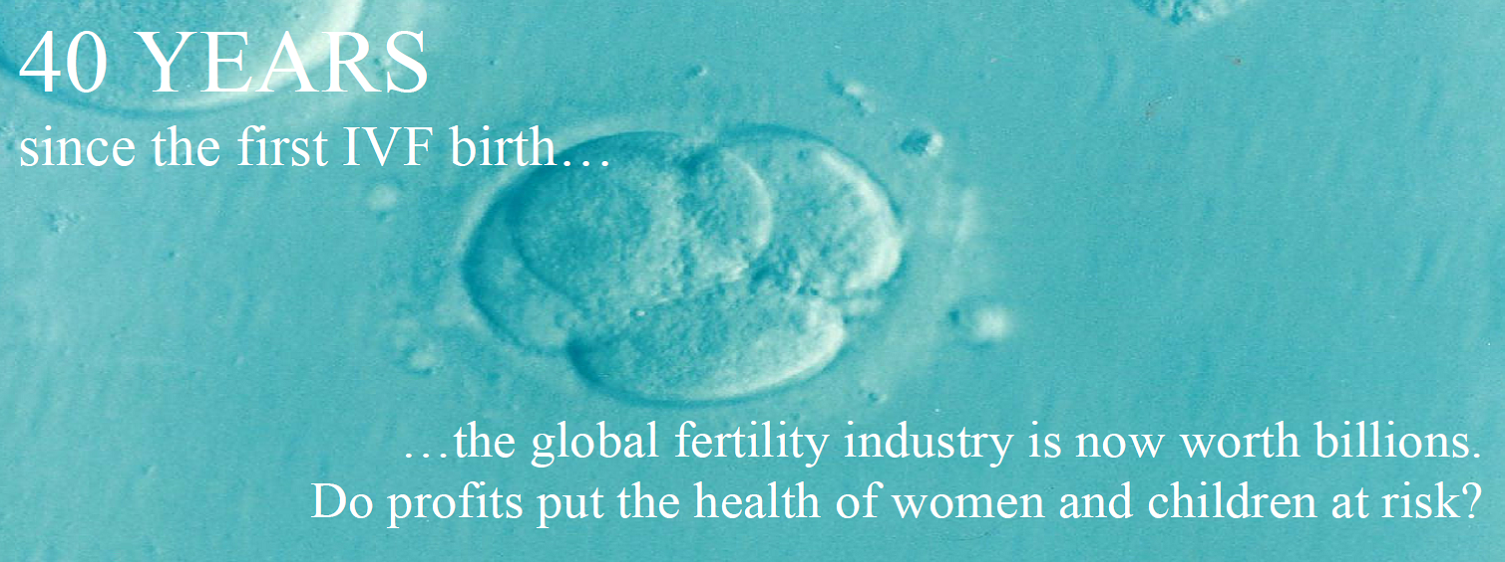
The first baby born as a result of in vitro fertilization (IVF) celebrates her 40th birthday on July 25. This is a landmark not only for Louise Brown but also for the millions of others whose lives have been impacted by assisted reproduction.
While there’s reason to celebrate, many challenging and sobering stories are waiting to be told. To provide some pointers toward these, the Center for Genetics and Society has prepared a two-page fact sheet on IVF, which can be accessed on the Center for Genetics and Society website here. We also draw your attention to this infographic on international commercial surrogacy developed by Our Bodies Ourselves.
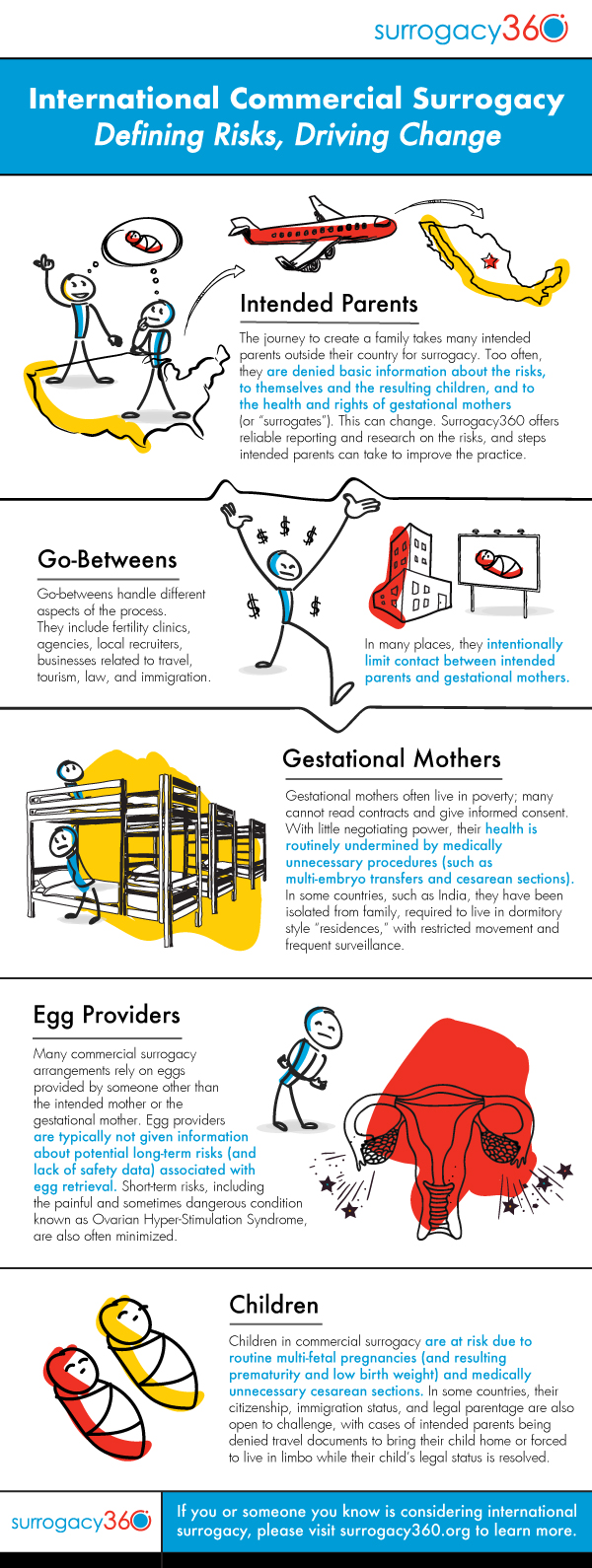
The fact sheet begins with the growth of infertility treatment into a multi-billion dollar global industry. It touches on angles including
- IVF’s persistently high failure rates
- the under-studied but disturbing risks of egg retrieval and egg freezing
- inadequate oversight and accountability in many aspects of the assisted reproduction industry
- lack of access to assisted reproduction due to expense and/or discrimination against single and LGBTQ people
- concerns that genetic screening devalues and stigmatizes people living with disabilities
- stark power imbalances among participants in commercial surrogacy and egg “donation” arrangements
References are available online and on request.
The fact sheet was compiled in consultation with colleagues working in the fields of women’s health and wellness, reproductive rights and justice, and disability rights; and representing organizations founded by current and former egg providers and IVF patients. Those listed below are available for interviews.
- Marcy Darnovsky | Executive Director | Center for Genetics and Society | 510.665.7760 ext 305 | darnovsky@geneticsandsociety.org
- Pamela M. Tsigdinos | Co-Founder |ReproTech Truths |408.674.6997 | pamelatsigdinos@gmail.com
- Nourbese Flint | Policy Director and Manager of Reproductive Justice Programming | Black Women for Wellness | 323.420.6934 | nourbese@bwwla.com
- Raquel Cool | We Are Egg Donors | raquelcherylcool@gmail.com
- Wendy Kramer | Co-Founder and Director| Donor Siblings Registry | 303.258.0902| wendy@donorsiblingregistry.com
- Silvia Yee | Senior Staff Attorney | Disability Rights Education and Defense Fund | 510.644.2555 | syee@dredf.org
- Judy Norsigian | Board Chair and Executive Director Emeritus | Our Bodies Ourselves | 617.233.0062 I judynorsigian@gmail.com
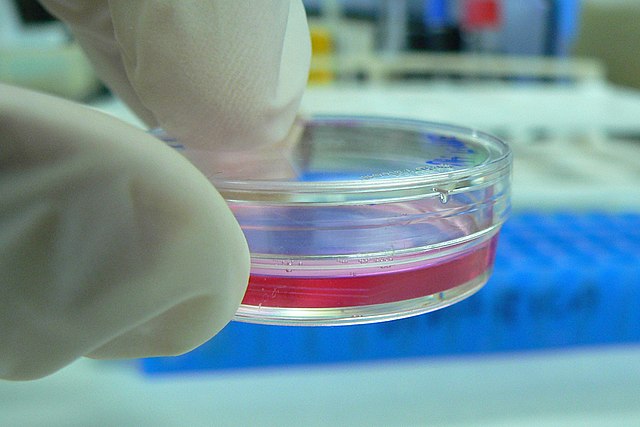
In a paper published today in Nature, a research group led by Kathy Niakan of The Francis Crick Institute in London describes the use of CRISPR-Cas9 to study the functions of a particular gene involved in very early stages of human embryonic development. The authors used embryos left over from fertility treatments, and stopped their development after 7 days.
This publication comes less than two months after another high-profile Nature article describing experiments involving gene-edited human embryos at Oregon Health and Science University (OHSU), led by Shoukhrat Mitalipov. In contrast to that study, Niakan et. al. do not present their work as being aimed at using gene editing directly for human reproduction, but rather as a tool for basic scientific inquiry.
“The Niakan paper’s tone and language are much more restrained and cautious than Mitalipov’s," said Marcy Darnovsky, PhD, Executive Director of the Center for Genetics and Society. "In his article and in public statements, Mitalipov made no secret of his eagerness to establish pregnancies with gene-edited human embryos. Niakan’s paper seems to carefully and deliberately stay away from that kind of language.”
The two studies also differed in that Niakan used surplus embryos, whereas Mitalipov used embryos specifically created for his experiments. This means that Mitalipov’s work relied on an unspecified number of women undergoing egg retrieval, with its attendant risks.
Additionally, the legal and regulatory context for germline editing in the UK is very different from that in the United States. In the UK, as in dozens of other nations, using gene-edited human embryos to initiate a pregnancy is illegal. This is not the case in the US, although agency regulations and funding restrictions provide an indirect prohibition against reproductive germline modification.
The Niakan paper states that its findings may eventually lead “to improvements in…IVF treatments,” though it does not specify how that would be accomplished. In previous public statements, Niakan has said that her interest lies in determining the reasons for early failures in embryonic development and for miscarriages.
“We would have liked to see a clear statement from the UK researchers – and from others who may now experiment with CRISPR in human embryos – that their work does not aim to refine gene editing for efforts to engineer the traits of future children,” Darnovsky said. “This is especially important because of the few who are openly advocating using germline editing for human reproduction.”
“Regulation and oversight in the U.S. and some other countries are inadequate,” Darnovsky continued. “That makes the anticipated spread of experiments with gene editing and human embryos, even for basic research, cause for concern. Stronger prohibitions against creating genetically modified humans in jurisdictions where those rules are lacking, and clearer commitments among scientists for the same, would allow for more confidence in supporting basic scientific research that involves gene editing and human embryos.”
####
The Center for Genetics and Society is a non-profit public affairs and policy advocacy organization working to encourage responsible uses and effective societal governance of human genetic and reproductive biotechnologies.
Contact:
Marcy Darnovsky, Executive Director, 510-665-7760, ext 305
darnovsky[AT]
Katie Hasson, Program Director on Genetic Justice, 510-665-7760, ext 307
khasson[AT]geneticsandsociety[
Image via WikiMedia Commons

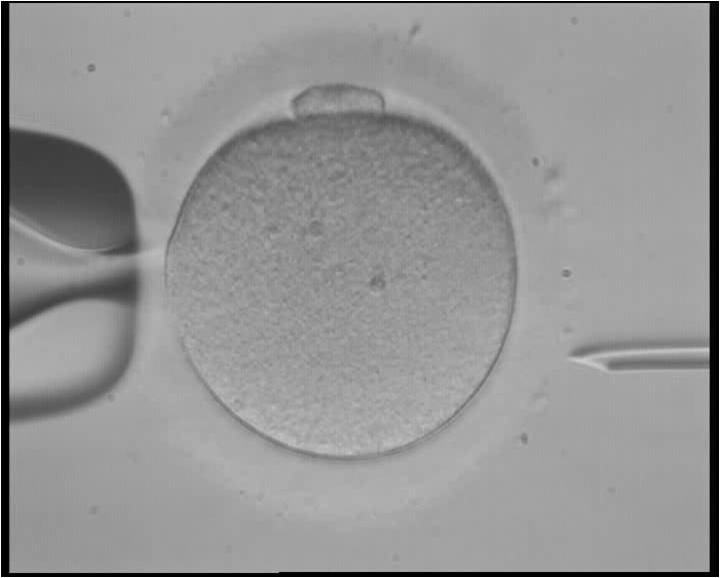
A paper published today in Nature reported on work led by Oregon Health & Science University (OHSU) researcher Shoukhrat Mitalipov to genetically edit human embryos, apparently with the goal of using this technique for reproductive purposes.
“This is a pivotal point in the push toward genetically modified humans,” said Marcy Darnovsky, PhD, Executive Director of the Center for Genetics and Society. “A small group of scientists and closed committees have taken it upon themselves to move forward with reproductive germline modification technologies, scorning repeated calls by scientists, scholars, regulatory bodies, and civil society organizations around the world to keep this use of genetic engineering off limits. Mitalipov and his collaborators were clearly aware of the widespread calls for democratic deliberation and public engagement on this matter, but flagrantly disregarded them.”
Notably, Mitalipov and colleagues clearly indicate that their research is aimed at gene editing for human reproduction. The justification they offer is to “rescue mutant embryos, increase the number of embryos available for transfer and ultimately improve pregnancy rates.”
“There is no pretense to basic scientific discovery here. The goal is clearly to develop applications that could be marketed in fertility clinics,” said Darnovsky.
“This decision is consequential for all of us – for all of humanity,” Darnovsky said. “Dozens of countries have deliberated about it, and passed laws prohibiting germline alterations. We have not yet engaged in processes that would promote the`broad societal consensus’ about human germline modification that the National Academies of Sciences and other prominent advocates of gene editing have recommended. Until that is achieved, we call on scientists around the world to refrain from research aimed at refining gene editing for use in human reproduction.”
The gene variant targeted in the Mitalipov study increases the risk of Hypertrophic Cardiomyopathy (HCM). Most individuals with HCM have few symptoms and average life expectancy. “The reproductive gene editing envisioned in the Mitalipov study flouts even the weak restrictions recommended in the National Academies report,” Darnovsky said.
As with almost all other inherited diseases, carriers can avoid the transmission of HCM using existing embryo screening techniques. “The claim that germline editing is needed to prevent the transmission of serious inherited disease is deeply deceptive,” said Darnovsky. “It both ignores existing alternatives that don’t require manipulating genes, and demonstrates the impossibility of distinguishing between serious and less serious disease, or between disease and enhancement."
“Allowing any form of human germline modification leaves the way open for all kinds – especially when fertility clinics start offering ‘genetic upgrades’ to those able to afford them,” she continued. “Once those commercial dynamics kick in, we could all too easily find ourselves in a world where some people’s children are considered biologically superior to the rest of us. We need to ask ourselves whether we want that new kind of excuse for extreme social disparities we already tolerate.”
Marcy Darnovsky
1-510-625-0819 x305
mdarnovsky[AT]geneticsandsociety[DOT]org