We Need to Talk About CRISPR
By Staff,
The Medicine Maker
| 03. 21. 2025
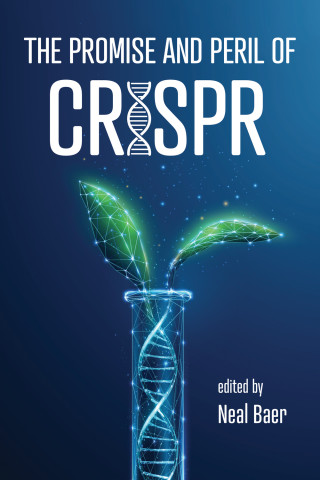
"The Promise and Peril of CRISPR" cover by Johns Hopkins University Press
As a paediatrician taking care of children with sickle cell disease, Neal Baer, a Harvard Medical School graduate, was in awe of the power of CRISPR technologies. Later becoming a TV show writer (for hit shows such as ER, Law and Order, and Under the Dome), Baer realized that the promise of advanced medicine could quickly become a peril, if placed in the wrong hands. This inspired him to compile a collection of essays that asks how far could – or should – humanity develop it. The Promise and the Peril of CRISPR chronicles the human condition in the 21st century, and asks what is more valuable: saving lives, or wielding power? Here he discusses the duality of CRISPR.
What inspired you to compile a collection of essays about CRISPR specifically?
There are lots of reasons. It’s important to know who has access to the data, and the DNA. Is it safe? What are the unforeseen consequences? Will there still be problems once one piece of DNA...
Related Articles
By Rob Stein, NPR [cites CGS' Katie Hasson] | 09.29.2026
Cathy Tie slips on a white lab coat bearing her name and the logo of her startup: Origin Genomics. "Welcome!" she says as she leads an NPR reporter, photographer and videographer on an exclusive tour of Origin's labs located...
Artificial Intelligence (AI) has been a major focus of news recently, as it should have been, under the appropriately ridiculous name of Hugging Face, “a leading collaboration platform and community hub for machine learning, artificial intelligence, and data science.” In July, Hugging Face was hacked. The platform itself responded:
Earlier this week, we detected and responded to an intrusion into part of our production infrastructure. This one was different from anything we had handled before in one important way...
By Miryam Naddaf, Nature | 09.21.2026
A wave of epigenetic therapies is offering hope as ways to cure chronic hepatitis B — a lingering liver infection that is caused by the hepatitis B virus (HBV) and affects more than 250 million people around the world. Currently...
By Karen Weintraub, Endpoints News | 09.16.2026
To better understand certain neuropsychiatric disorders, researchers at Stanford University have bred rodents that lack a cortex and hippocampus and then replaced those missing brain cells with human ones.
The altered mice, a scientific first, provided insights that would not...