
Gene Editing is Revolutionizing Medicine but Causing a Government Ethics Nightmare
By Jessica Firger,
Newsweek
| 08. 01. 2017
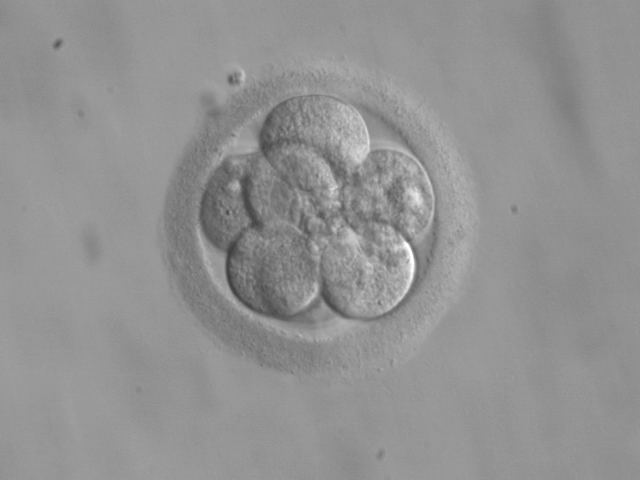
Late last week, reports emerged that scientists in Oregon had used gene-editing technology, known as CRISPR-Cas9, to edit a human embryo. While research like this is already occurring in China and Great Britain, this is the first time scientists in the U.S. have edited an embryo.
The move raises the question of whether regulations are strict enough in the U.S. Both Congress and the National Institutes of Health have explicitly said they would not fund research that uses gene-editing to alter embryos. But laws and guidelines are not keeping pace with this fast-moving and controversial work.
CRISPR is an experimental biomedical technique in which scientists are able to alter DNA, such as change the “misspellings” of a gene that contributes to mutations. The technology has the potential to reverse and eradicate congenital diseases if it can be used successfully on a developing fetus.
The news frenzy that followed this announcement was based on a leak from unknown sources. Initial reports emerged from a number of less known sources, including MIT Technology Review, that Shoukhrat Mitalipov of Oregon Health and Science...
Related Articles
A Review of Exposed by Becky McClain
“Do not get lost in a sea of despair. Be hopeful, be optimistic. Our struggle is not the struggle of a day, a week, a month, or a year, it is the struggle of a lifetime. Never, ever be afraid to make some noise and get in good trouble, necessary trouble.”
— John Lewis
Becky McClain became famous when she successfully sued Pfizer, one of the very largest pharmaceutical and biotech companies. She...
By staff, Japan Times | 12.04.2025
Japan plans to introduce a ban with penalties on implanting a genome-edited fertilized human egg into the womb of a human or another animal amid concerns over "designer babies."
A government expert panel broadly approved a proposal, including the ban...
By Katherine Long, Ben Foldy, and Lingling Wei, The Wall Street Journal | 12.13.2025
Inside a closed Los Angeles courtroom, something wasn’t right.
Clerks working for family court Judge Amy Pellman were reviewing routine surrogacy petitions when they spotted an unusual pattern: the same name, again and again.
A Chinese billionaire was seeking parental...
By Sarah A. Topol, The New York Times Magazine | 12.14.2025
The women in House 3 rarely had a chance to speak to the women in House 5, but when they did, the things they heard scared them. They didn’t actually know where House 5 was, only that it was huge...