


Aggregated News
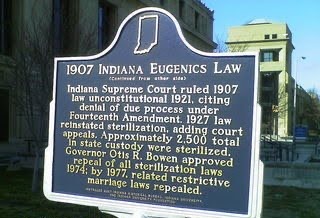
An innovative new website, Eugenic States: A Contextual Archive, uses digital storytelling to preserve and illuminate a disturbing and largely unknown chapter in U.S. history.
During the 20th century, more than 60,000 people in the United Stateswere sterilized based on state eugenics laws. Very few were asked whether they wanted the procedure—instead, they were coerced or forced. The laws that enabled this to happen, passed in 32 states, aimed to shape and limit populations through reproductive control, giving doctors and state officials the power to decide who was “fit” to have children.
Eugenic States was created by Jacqueline Wernimont, Distinguished Chair, Digital Humanities and Social Engagement; history scholar Gianna May Sanchez; and UCLA English professor Alexandra Minna Stern. Representing decades of research, the website is designed to be an accessible resource for general readership about the eugenics movement and its effects.
The eugenics laws—in place from the early 1900s through the 1970s—mainly targeted patients in state asylums and hospitals.
Ableism—prejudice or discrimination against people with physical, intellectual, or psychiatric disabilities—was “the foundational idea behind eugenic sterilization, and...