Trump echoes Hitler — and MAGA hears it loud and clear
By Heather Digby Parton,
Salon
| 12. 18. 2023
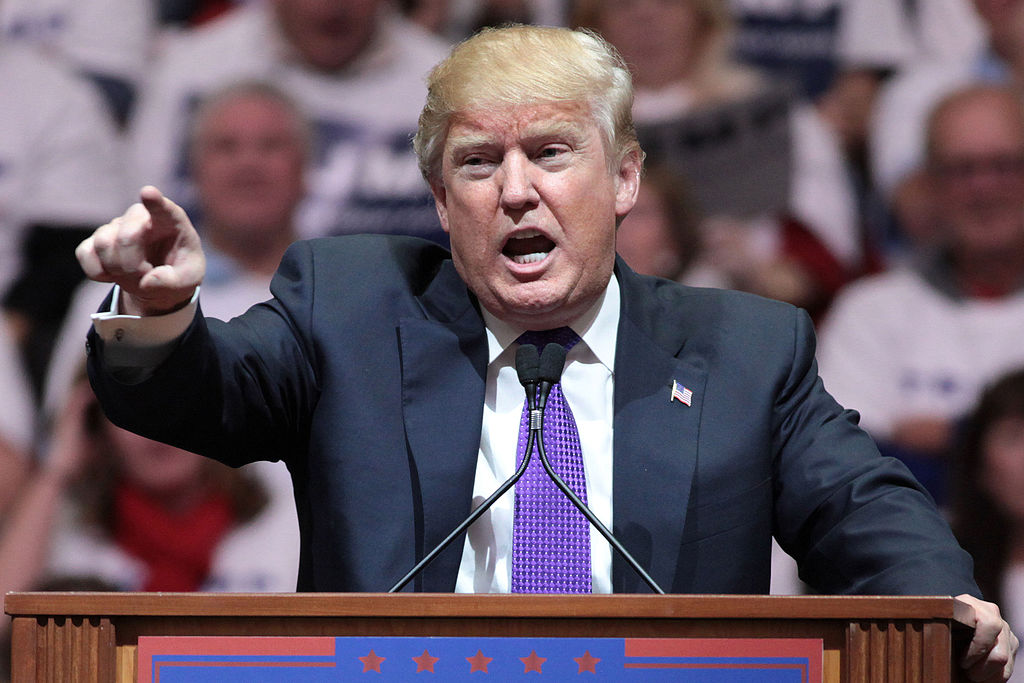
Photo by Gage Skidmore from Peoria, AZ, United States of America, CC BY-SA 2.0, via Wikimedia Commons
Donald Trump believes in eugenics. He really does. Of course, his understanding of it is purely based upon his own belief in his superior genes and good "German blood." He's said it many times in public.
When he said during his first term that he didn't understand why the U.S. allowed people from "shit-hole countries" to emigrate to the U.S. and suggested that we should encourage people from Norway to come instead, it wasn't hard to figure out what he meant by that. His xenophobia never applied to white European immigrants. After all, he married two of them and they are the mothers of four of his five children. His problem is with people of different races.
If someone of a different race expresses devotion to him then of course he likes them. Think of Kim Jong Un, whom he considers to be one of his greatest allies. But it's a very individual thing. For the most part, Trump believes that...
Related Articles
By Charles Schmidt, Undark | 09.25.2026
In 2010, scientists at the University of Tokyo and other institutions reported a startling achievement: They had successfully grown a pancreas made almost entirely of rat cells within the bodies of mice. The research was directed by Hiromitsu Nakauchi, a...
By Rob Stein, NPR [cites CGS' Katie Hasson] | 09.29.2026
Cathy Tie slips on a white lab coat bearing her name and the logo of her startup: Origin Genomics. "Welcome!" she says as she leads an NPR reporter, photographer and videographer on an exclusive tour of Origin's labs located...
By Erik Adams, Sundance | 09.08.2026
The scariest movie playing at the 2026 Sundance Film Festival isn’t about cursed audio recordings or a killer demon disguised as your true love; rather it’s a 110-minute essay film about how a handful of guys obsessed with numbers and...
Artificial Intelligence (AI) has been a major focus of news recently, as it should have been, under the appropriately ridiculous name of Hugging Face, “a leading collaboration platform and community hub for machine learning, artificial intelligence, and data science.” In July, Hugging Face was hacked. The platform itself responded:
Earlier this week, we detected and responded to an intrusion into part of our production infrastructure. This one was different from anything we had handled before in one important way...



.jpg)