Pregnant Woman’s False Arrest in Detroit Shows “Racism Gets Embedded” in Facial Recognition Technology
By Amy Goodman,
Democracy Now
| 08. 07. 2023
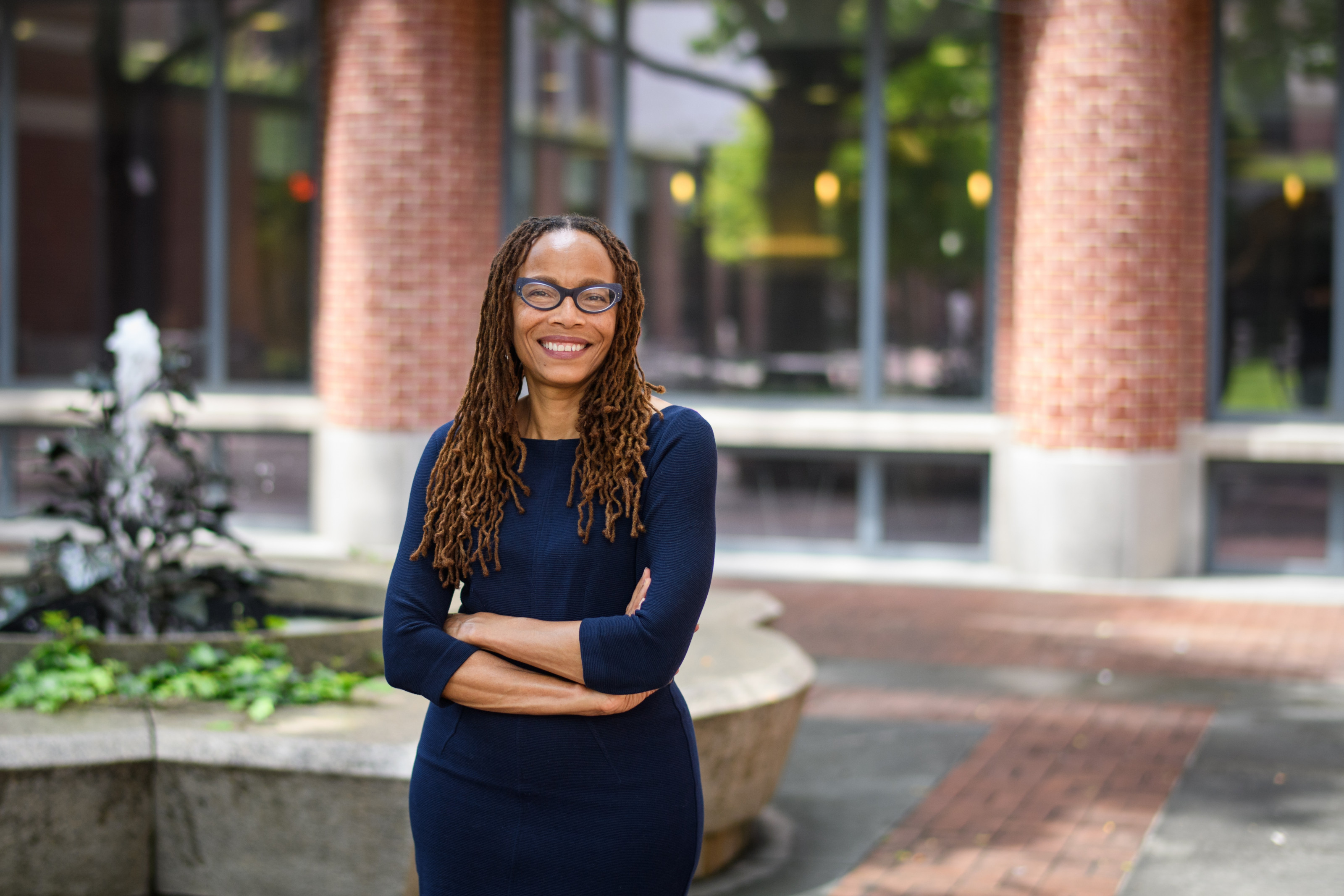
A shocking story of wrongful arrest in Detroit has renewed scrutiny of how facial recognition software is being deployed by police departments, despite major flaws in the technology. Porcha Woodruff was arrested in February when police showed up at her house accusing her of robbery and carjacking. Woodruff, who was eight months pregnant at the time, insisted she had nothing to do with the crime, but police detained her for 11 hours, during which time she had contractions. She was eventually released on a $100,000 bond before prosecutors dropped the case a month later, admitting that her arrest was based in part on a false facial recognition match. Woodruff is the sixth known person to be falsely accused of a crime because of facial recognition, and all six victims have been Black. “That’s not an accident,” says Dorothy Roberts, director of the University of Pennsylvania Program on Race, Science and Society, who says new technology often reflects societal biases when built atop flawed systems. “Racism gets embedded into the technologies.”
Transcript
AMY GOODMAN: Professor Roberts, I wanted to end by asking...
Related Articles
Artificial Intelligence (AI) has been a major focus of news recently, as it should have been, under the appropriately ridiculous name of Hugging Face, “a leading collaboration platform and community hub for machine learning, artificial intelligence, and data science.” In July, Hugging Face was hacked. The platform itself responded:
Earlier this week, we detected and responded to an intrusion into part of our production infrastructure. This one was different from anything we had handled before in one important way...
By Gay Pasley, Essence | 09.04.2026
That is what makes the unfolding case of McKenna West so important. It is more than a disagreement about abortion or a dispute over a surrogacy contract. It asks whether an agreement signed before a pregnancy can become authority...
By Anna L. Philippe, Pop Panic | 09.17.2026
What does it mean when education is considered a threat to population? As an education student, I am interested in the ways population panics are essentialized and circulated in formal education settings. Schools can play a major role in shaping...
By Ava Kofman, The New Yorker | 09.15.2026
A WOMAN WHO ACTS AS A SURROGATE, carrying a child for someone else, is said to be going on a “journey.”
Kayla Elliott started her surrogacy journey at the age of twenty-six. She gave birth to a baby girl for...