Japan Approves the World’s First Treatment Made With Reprogrammed Human Cells
By Ritsuko Kawai,
Wired
| 03. 14. 2026
Researchers in Japan pioneered reprogrammed cells 20 years ago. Now the country has given the first-ever authorizations to manufacture and sell medical products based on the technology.
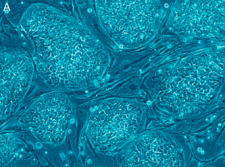
On March 6, Japan’s Ministry of Health, Labor and Welfare officially granted conditional and time-limited marketing authorization to two regenerative medical products derived from reprogrammed iPS cells, marking exactly 20 years since the creation of mouse iPS cells.These will be the world's first practical application of iPS cell-derived products.
“We are very pleased to have taken a major step toward social application on the 20th anniversary of the announcement of mouse iPS cells,” said Shinya Yamanaka, director emeritus of the iPS Cell Research Institute at Kyoto University. “To establish it as a medical treatment, it is essential to go through the process of confirming its safety and efficacy in many more cases. I believe it is important that we continue to move forward steadily, step by step, with scientific caution and without getting carried away.”
What Are iPS cells?
The initialism stands for induced pluripotent stem cells. These are adult cells, such as skin or blood cells, that have been reprogrammed to function like embryonic stem cells. They can divide indefinitely and can take the form of any cell...
Related Articles
By Rob Stein, NPR [cites CGS' Katie Hasson] | 09.29.2026
Cathy Tie slips on a white lab coat bearing her name and the logo of her startup: Origin Genomics. "Welcome!" she says as she leads an NPR reporter, photographer and videographer on an exclusive tour of Origin's labs located...
Artificial Intelligence (AI) has been a major focus of news recently, as it should have been, under the appropriately ridiculous name of Hugging Face, “a leading collaboration platform and community hub for machine learning, artificial intelligence, and data science.” In July, Hugging Face was hacked. The platform itself responded:
Earlier this week, we detected and responded to an intrusion into part of our production infrastructure. This one was different from anything we had handled before in one important way...
By Miryam Naddaf, Nature | 09.21.2026
A wave of epigenetic therapies is offering hope as ways to cure chronic hepatitis B — a lingering liver infection that is caused by the hepatitis B virus (HBV) and affects more than 250 million people around the world. Currently...
By Karen Weintraub, Endpoints News | 09.16.2026
To better understand certain neuropsychiatric disorders, researchers at Stanford University have bred rodents that lack a cortex and hippocampus and then replaced those missing brain cells with human ones.
The altered mice, a scientific first, provided insights that would not...