Everybody Freeze!
By Corey Pein,
The Baffler
| 03. 09. 2016
Untitled Document
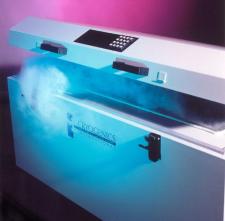
Narratives are made by the artful omission of facts. Never was this maxim more evident than in a gullible feature story that landed on the front page of the New York Times last fall, about a young woman’s last-ditch bid for life extension as she succumbed to the ravages of brain cancer. A sober look at the case would have revealed it to be but the latest botched mortuary procedure conducted by a gang of creepy scam artists. Instead, through the good graces of the Times, this grim tale was spun into an inspirational saga of one person’s courageous quest for a second chance at life, aided by medical visionaries on the verge of miraculous technological breakthroughs.
Kim Suozzi died at age twenty-three in January 2013. After her first diagnosis, twenty-one months earlier, Suozzi chose to become one of the youngest people ever[*] to undergo an expensive form of ritualistic corpse mutilation called cryonic preservation. In pop culture, cryonics is perhaps best known as the plot device that transports the schlubby pizza delivery guy in Matt...
Related Articles
By Alexandra Minna Stern, Los Angeles Review of Books | 09.26.2026
This is the 17th installment in the Legacies of Eugenics series, which features essays by leading thinkers devoted to exploring the history of eugenics and the ways it shapes our present. The series is organized by Osagie K. Obasogie in...
By Marcia Langton, National Indigenous Times | 09.22.2026
Pauline Hanson speaking about Aboriginal people on a white Christian podcast last year said "they're the most primitive race on Earth and we're supposed to be holding them up and saying what they've achieved? They've achieved nothing." She resurrected the...
By Erik Adams, Sundance | 09.08.2026
The scariest movie playing at the 2026 Sundance Film Festival isn’t about cursed audio recordings or a killer demon disguised as your true love; rather it’s a 110-minute essay film about how a handful of guys obsessed with numbers and...
By Gaia Ghirardi, Arno Van Hootegem & K. Paige Harden , Nature Human Behaviour | 09.21.2026
Embryo screening for behavioural traits is no longer speculative. If you want to become a parent in the USA today, you can pay to use pre-implantation polygenic testing (PGT-P) of in vitro fertilization (IVF)-created embryos. PGT-P promises to optimize offspring...