5 Ways to Teach Disability History in Social Studies Class
By Kara Newhouse,
KQED
| 07. 29. 2024
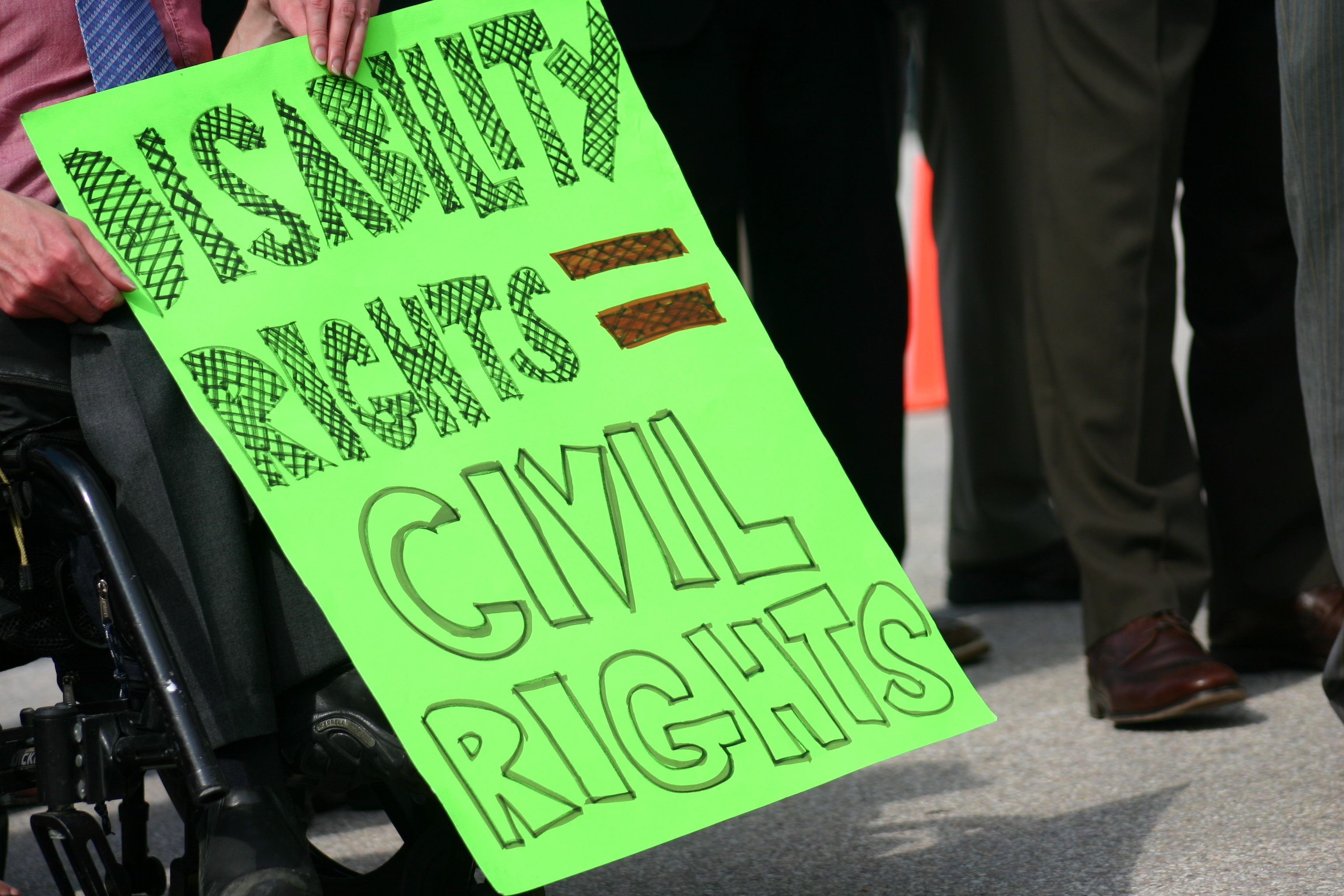
Image by The Leadership Conference on Civil and Human Rights from Flickr licensed under CC by NC 2.0
A few years ago, curriculum specialist Richard Cairn showed a photo from the World War II era to two young men he was working with on a campaign to promote teaching disability history. The image shows a man with multiple disabilities processing airplane parts in an American defense plant. Cairn said the two volunteer leaders, who live with multiple disabilities, were surprised by the image. “They were excited to learn that people with disabilities had been involved in helping to fight fascism during World War II and upset that this had not been discussed in their high school history class,” Cairn said.
The young men’s excitement turned the photo into Cairn’s favorite image from disability history — and he has many to choose from. Cairn is one of the creators of Reform to Equal Rights, a free K-12 disability history curriculum that features 250 primary sources in its lesson plans. The curriculum is a project of the nonprofit Collaborative for Educational...
Related Articles
By Charles Schmidt, Undark | 09.25.2026
In 2010, scientists at the University of Tokyo and other institutions reported a startling achievement: They had successfully grown a pancreas made almost entirely of rat cells within the bodies of mice. The research was directed by Hiromitsu Nakauchi, a...
By Rob Stein, NPR [cites CGS' Katie Hasson] | 09.29.2026
Cathy Tie slips on a white lab coat bearing her name and the logo of her startup: Origin Genomics. "Welcome!" she says as she leads an NPR reporter, photographer and videographer on an exclusive tour of Origin's labs located...
By Alexandra Minna Stern, Los Angeles Review of Books | 09.26.2026
This is the 17th installment in the Legacies of Eugenics series, which features essays by leading thinkers devoted to exploring the history of eugenics and the ways it shapes our present. The series is organized by Osagie K. Obasogie in...
By Erik Adams, Sundance | 09.08.2026
The scariest movie playing at the 2026 Sundance Film Festival isn’t about cursed audio recordings or a killer demon disguised as your true love; rather it’s a 110-minute essay film about how a handful of guys obsessed with numbers and...