


Assisted Reproduction
Assisted reproductive technologies, like in vitro fertilization (IVF), are used to treat medical infertility and to help single and LGBTQI people form families. They have provided welcome opportunities for millions, but their significant safety risks are often downplayed or overlooked by the fertility industry. For example, egg retrieval for IVF relies on injections of powerful hormonal drugs which can cause ovarian hyperstimulation syndrome, a serious condition that can require hospitalization and in rare cases has resulted in death.
Regulation and oversight of the fertility sector varies widely among countries and sometimes within them (as in the U.S.). The same is true of costs. Together, these differences encourage “cross-border reproductive care,” especially for surrogacy arrangements. Yet weak or laxly enforced policies can harm all parties – intended parents, children, egg providers, and surrogates. Power imbalances among these parties increase the potential for exploitation.
Aggregated News
TORONTO — Women who become pregnant using fertility treatments — particularly in-vitro fertilization — have a slightly higher risk of...
Aggregated News
Bill McKibben and john a. powell came discuss the “Climate Crisis, Designer Babies, and Our Common Future.” The event was moderated by Osagie K. Obasogie, Professor of Bioethics at UC Berkeley.
George Estreich discusses his most recent book Fables and Futures, inspired by his daughter Laura. Estreich goes beyond the personal to describe the ways that genetic technologies affect society and the stories the promoters of such technologies tell about them. The event took place on May 1, 2019 at the San Francisco Public Library.
KPIX 5 CBS SF Bay Area: Only a week after announcing that he altered the DNA of embryos for seven couples, He Jiankui is now missing. He was last seen at a conference in Hong Kong. Elizabeth Cook reports, and speaks with local expert Marcy Darnovsky, Executive Director of the Center for Genetics and Society. (12-3-2018)
On CGTN America, Marcy Darnovsky, PhD, the executive director of the Center for Genetics and Society, discusses the ethics of human genetic modification.
While embryo selection and gene editing technologies may offer great hope to couples looking to prevent hereditary disease or improve fertility. The debate over these technologies has reignited concerns that we are closer to slipping down the slope to designer babies than ever before. Are these fears warranted…or overblown?
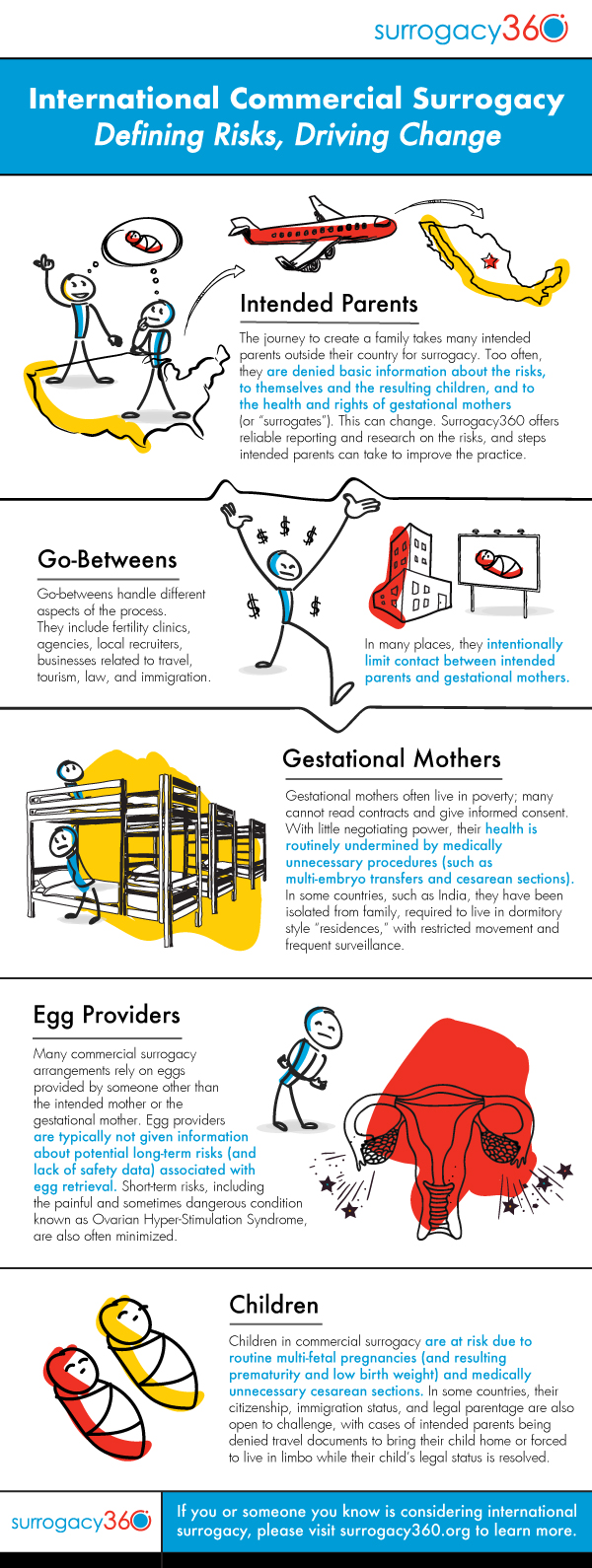
International Commercial Surrogacy - Defining Risks and Driving Change [Surrogacy360]
The World Forum on Science and Democracy brings together “representatives of civil society engaged in the democratization of the production of scientific and technological knowledge.” On March 14, David King of Human Genetics Alert (UK) and Marcy Darnovsky spoke via video to its fifth annual meeting, held in Bahia, Brazil, about “The Threat of GM Babies.”