
News

Cathy Tie slips on a white lab coat bearing her name and the logo of her startup: Origin Genomics. "Welcome!" she says as she leads an NPR reporter, photographer and videographer on an exclusive tour of Origin's labs located...

This is the 17th installment in the Legacies of Eugenics series, which features essays by leading thinkers devoted to exploring the history of eugenics and the ways it shapes our present. The series is organized by Osagie K. Obasogie in...

THE INSTAGRAM POST, precision-guided by sex and age, had zeroed in on its target. Yuchen Tu is a conser­vatory-trained viola...

This is the 16th installment in the Legacies of Eugenics series, which features essays by leading thinkers devoted to exploring...
By Osagie K. Obasogie and Pete Shanks, The Cutting Edge | 08.12.2007

The FDA is still considering whether to allow meat and milk from cloned animals into America's food chain, without so...

By Alison Motluk, New Scientist | 08.09.2007

CAREFUL, exacting, high-tech - that's the image US sperm banks like to project to their customers. They run limited genetic...

By Associated Press, Associated Press | 08.08.2007

TOKYO - A Japanese geneticist said Wednesday his research team created the world's first fourth-generation cloned pig, an achievement that...

Press Statement
Troubling new revelations have emerged this week in the death of an Illinois woman in a gene therapy trial for arthritis, prompting the Center for Genetics and Society to call on the federal government to consider firmer regulatory action.

The death of 36-year-old Jolee Mohr in a gene transfer experiment sponsored by Targeted Genetics Corporation of Seattle raises important concerns about other participants in the 20 study locations across the country, and about participants in clinical trials of gene therapy and biomedical research more generally.

Based on these concerns, the Center for Genetics and Society is urging the Food and Drug Administration (FDA) to make public complete information about the Targeted Genetics arthritis study. This information should include full details about the informed-consent process in all study locations, about payments to doctors who enrolled their patients in the study, and about changes to the inclusion criteria for the study since it was reviewed by the National Institutes of Health (NIH) committee in 2003.
 
Among the questions raised by the death in the Targeted Genetics arthritis study:
  • How did the shortcomings of the informed-consent document and process affect Jolee Mohr's understanding of the risks involved? What role did they play in her decision to participate in the arthritis study? Are there similar flaws in other study locations?
  • Did Jolee Mohr's doctor inform her about the payment made by Targeted Genetics for enrolling her in the study? Are similar payments being made in other study locations? If so, are other participants informed?
  • Did the delay in reporting Jolee Mohr's illness by the doctors involved in the Targeted Genetics experiment put other participants at risk?
  • What was the process used to approve changes in the study protocol that allowed participation by people already taking arthritis drugs, and changes that allowed two injections of the experimental treatment instead of one?

In a press statement on August 2, the Center for Genetics and Society raised concerns about changes in FDA and NIH procedures on gene transfer experimentation, and called for greater transparency and accountability in this field. CGS also called for limiting gene transfer experimentation to people who suffer from serious conditions for which there are no acceptable alternative treatments, because of the field's record of several deaths, hundreds of serious adverse events, and very little benefit after 17 years.

The Targeted Genetics arthritis study, which has been suspended by the FDA, was being conducted in the following locations, according to the NIH web site that tracks clinical trials:
Arizona: Glendale and Tucson
California: Palm Desert and Upland
Colorado: Denver
Florida: Boca Raton, Ocala, Stuart
Idaho: Coeur d'Alene
Illinois: Chicago, Springfield
Maryland: Frederick
Nevada: Reno
New York: Johnson City
Oklahoma: Oklahoma City
Pennsylvania: Duncansville, Willow Grove
Texas: Austin, Dallas (2 sites), San Antonio
Washington: Seattle
 
# # #
The Center for Genetics and Society is a nonprofit information and public affairs organization working to encourage responsible uses and effective societal governance of the new human genetic and reproductive technologies. It supports women's health and reproductive rights, including the right to terminate an unwanted pregnancy. For more information, see http://www.genetics-and-society.rsvp1.com/s18cb01U7wp

Contact:
Osagie Obasogie
510-625-0819 x310


By Rick Weiss, Washington Post | 08.06.2007

Robb Mohr sat by his wife's hospital bed two weeks ago, trying to take it all in. His wife, Jolee...

By Nicholas Wade, New York Times | 08.03.2007

The world of stem cell research was set reeling two years ago when its most successful practitioner, the Korean scientist...

Press Statement
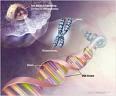
Illustrative image of a double helic with a chromosome.

The Center for Genetics and Society called today for increased scrutiny, transparency, and accountability for gene therapy experiments. The call comes in the wake of last week's death of a participant in a clinical trial of gene transfer for arthritis.

The recent death, in a study sponsored by Seattle-based Targeted Genetics Corporation, raises many questions and concerns, some of which have plagued the gene transfer field since its inception more than 15 years ago. In hundreds of clinical trials over that period there have been no unqualified successes, hundreds of serious adverse reactions, and some deaths.

"Given the record of significant risks and very little benefit after years of experimentation, tests of gene transfer should be limited to people who suffer from serious conditions for which there are no acceptable alternative treatments," said Marcy Darnovsky, the Center's Associate Executive Director.

Investigations following the death in 1999 of 18-year-old Jesse Gelsinger in a gene transfer clinical trial revealed serious ethical breaches and regulatory failures. An assessment is urgently needed to determine whether any similar lapses have occurred in the Targeted Genetics Corporation trial.

"Did the company follow the rules?" asked Dr. Darnovsky. "Did the FDA and the institutional review boards do their jobs?"

Such an evaluation will be made more difficult by changes in the rules governing human genetic experimentation that were implemented more than a decade ago. Access to information that had previously been publicly available was blocked, and the regulatory process was "streamlined" at the behest of industry.

"The new regulations represent a serious loss of transparency and accountability," said Osagie Obasogie, director of the CGS Program in Law and Bioethics. "We need more safeguards for research subjects and more public transparency. Instead, there is less."

CGS calls on the FDA to make available complete information about the Targeted Genetics arthritis study, including full details about the oversight provided by the FDA, the company, and the institutional review boards involved; and about the informed consent process.

"Were the participants fully informed of the risks involved? Were they told clearly that they could expect no benefits in an early-stage trial such as this one?" asked Obasogie.

The sponsorship of the arthritis study by Targeted Genetics raises additional questions. It acquired the company involved with the study in which Jesse Gelsinger died in 2000. "Targeted Genetics has an aggressive business plan and is already talking up its new arthritis treatment. Have the expectations of the company's funders and shareholders created incentives for taking ethical short cuts?" Obasogie asked.

"The precedents set in the investigation of this tragedy will have ramifications beyond the gene transfer field," Dr. Darnovsky said. "The quality of oversight and protection offered to human subjects will affect the safety of experiments with new drugs, new medical devices, and novel medical approaches such as stem cell treatments."

# # #

The Center for Genetics and Society is a nonprofit information and public affairs organization working to encourage responsible uses and effective societal governance of the new human genetic and reproductive technologies. It supports women's health and reproductive rights, including the right to terminate an unwanted pregnancy.


Contact:
Osagie Obasogie 
510-625-0819 x310


By Stephanie Simon, Los Angeles Times | 08.01.2007
KANSAS CITY, MO. - Nine months ago, Missouri voters became the first in the nation to pass a constitutional amendment...