


News
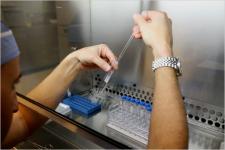
Justin Schleede reaches onto a black lab bench to pick up a tray of small plastic tubes.
"These are saliva...
"If proven to be safe, we believe preventive gene editing could be one of the most important health technologies of...
IVF octuplets and abuses of embryo screening highlight need for oversight
A new ad on a fertility clinic’s website offers a procedure to select the complexion - as well as the sex, eye color and hair color - of future children. This development, along with the birth of octuplets to a southern California woman, brings new attention to the urgent need for effective regulation and oversight of the multi-billion dollar assisted reproduction industry in the US, says the Center for Genetics and Society, a public interest organization.
"Assisted reproduction in America has been a Wild West for too long," said Marcy Darnovsky, PhD, the Center's Associate Executive Director. "Responsible oversight of extreme reproductive technologies such as embryo selection based on skin color is long overdue."
The website of the Fertility Institutes, a Los Angeles-based chain of fertility clinics, announces the "pending availability" of genetic tests for these traits. The testing would be part of the embryo screening procedure known as pre-implantation genetic diagnosis or PGD.
Dozens of assisted reproduction companies in the United States offer PGD for non-medical sex selection. This appears to be the first offer of the procedure for hair, eye, or skin color.
"Screening embryos for skin color isn't about reproductive choice," said CGS Senior Fellow and University of California's Hasting School of Law Associate Professor Osagie Obasogie. "It's about leveraging social prejudices to try to give your kid a leg up. Researchers say they haven't yet identified key genes that control skin color in people of non-Caucasian descent, but this is the tip of the iceberg in terms of how reproductive and genetic technologies could fundamentally reshape race relations."
The United States is notorious for its inadequate regulation and oversight of assisted reproduction, which has become a $3 billion dollar business in this country alone. A large majority of industrialized countries – including Canada, the UK, most of Europe, Japan, Israel, China, and Australia – prohibits non-medical sex selection. Many have established comprehensive oversight of assisted reproduction.
"The Fertility Institutes and its director have long pushed the limits of what is acceptable," continued Darnovsky. "They offer sex selection to any paying customer, even offering travel packages so that people can come to the US to dodge laws in their home nations."
The fertility industry’s national professional organization, the American Society for Reproductive Medicine, discourages the use of PGD for non-medical sex selection. Its guidelines also recommend limiting the number of embryos transferred into a woman’s body. But many assisted reproduction businesses openly violate these guidelines.
Last week, it was revealed that the octuplets born in southern California were conceived by IVF. Most cited fertility experts condemned the implantation of so many embryos, but Steinberg was among the few to defend it.
Osagie Obasogie is the author of the recent CGS report Playing the Gene Card? A Report on Race and Human Biotechnology.
The Center for Genetics and Society (www.geneticsandsociety.org) is a non-profit public affairs and policy advocacy organization working to encourage responsible uses and effective societal governance of human genetic and reproductive biotechnologies.
Contact:
Marcy Darnovsky
1-510-625-0819 x305
mdarnovsky[AT]geneticsandsociety[DOT]org