


News
Justin Schleede reaches onto a black lab bench to pick up a tray of small plastic tubes.
"These are saliva...
"If proven to be safe, we believe preventive gene editing could be one of the most important health technologies of...
In a preprint article posted to an online repository June 1 and reported in the New York Times June 4, a research group led by Dieter Egli at Columbia University describes results of experiments using base editing to change the DNA of human embryos. The paper, which has not yet been peer reviewed or published, claims that this method does not produce the widespread damage reported in previous experiments using CRISPR/Cas9 in human embryos – changes that Nature termed “chromosomal mayhem.” But the base editors still cause unintended off-target and on-target effects, as well as significant mosaicism, meaning that some cells in the embryo show the edits and others do not. Mosaicism could produce unknown health effects in any individual born from an edited embryo.
The improvements shown over previous CRISPR techniques, if they hold up to peer review, still fall far short of calling embryo editing safe. In addition to the unresolved issues of off-target editing and mosaicism, the authors have uncovered new ways that attempts to edit DNA can harm developing early embryos.
“Claims of ‘safe’ and ‘precise’ changes to the DNA of human embryos are reminiscent of similar claims nearly ten years ago. But subsequent research demonstrated that those edits were anything but safe. The truth remains: Editing human embryos for reproduction remains unacceptably risky and can likely never be fully safe, given the range of known and unknown harms it can cause,” said Center for Genetics and Society Executive Director Katie Hasson, PhD. “Nothing in this paper changes the fact that heritable human genome editing is unnecessary – given safe and effective alternatives such as embryo screening – and carries grave societal risks, in addition to being unsafe.”
One of the paper’s co-authors is Nathan Treff, formerly of embryo screening company Genomic Prediction and now working with Nucleus Genomics, the company that recently plastered New York City subway stations with advertising billboards urging parents to “Have your best baby” and “Have a smarter baby.” The ads claimed that traits including height and IQ could be controlled with its screening techniques. Nucleus Genomics reportedly provided assistance with the base editing research and is planning to fund its next stages.
“It’s extremely troubling to see this research collaboration with a company that is explicit about its plans to bring designer baby technology to the market as part of what it calls a “full ‘Genetic Optimization’ stack,” said Hasson. “This is clearly research that aims not only to cross the red line of heritable genome editing – which is currently prohibited in the United States and at least 70 countries around the world – but to attempt genetic enhancement with an eye to commercialization and profit.”
The report comes in the context of a rash of human embryo editing startups flush with money from Silicon Valley investors and with little respect for the global consensus against altering the genes of future generations. “The decision to edit the human germline belongs to all of us, and certainly should not be driven by Silicon Valley’s transhumanist fantasies of mass-produced, genetically enhanced children,” Hasson said. “The risk of a market-based techno-eugenics is much too large. Stronger prohibitions in the US and internationally are needed to prevent a world of genetic ‘haves’ and ‘have nots,’ where genes determine a person’s value.”
####
For more information, please contact Katie Hasson (khasson@geneticsandsociety.org) or call (510) 665-7760.
The Center for Genetics and Society is an independent nonprofit organization bringing social justice and human rights to the center of public and policy discussions about human genetics and assisted reproduction.
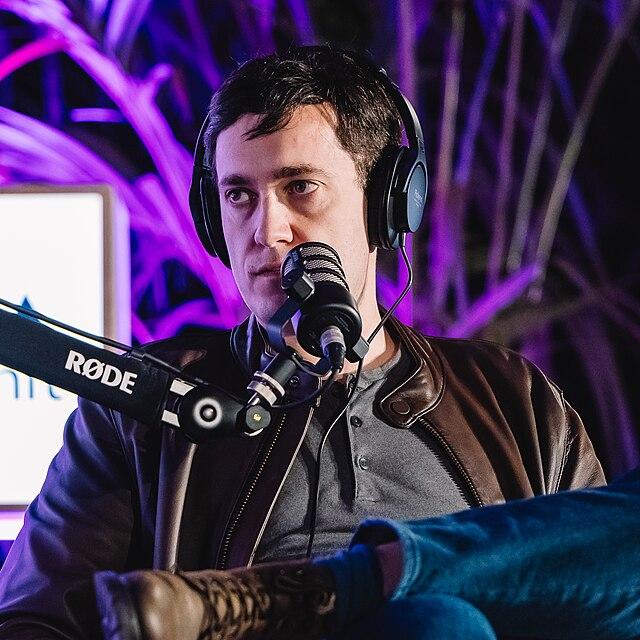
Ed Zitron, EZPR.com; Experience Summit stage;
Web Summit 2024 via Wikipedia Commons licensed under CC by 2.0

If some time...
This is Ask An Expert, where every weekday at 9:20am, KCBS Radio is giving you direct access to top experts...
The Center for Genetics and Society, a project of the Tides Center, has been awarded $751,000 by the Mellon Foundation to support activities that establish a more complete understanding of the histories and legacies of eugenics. This generous grant will make possible the launch of a new three-year initiative, Confronting Eugenics to Build a Just Future.
Confronting Eugenics will convene a core network of scholars across fields and issue advocates across sectors. The network will meet for a series of extended workshops, organize public events, and develop a robust collection of pedagogical and public resources that challenge historical and current eugenic abuses. It will better equip scholars, students, advocates, and communities with tools to recognize and resist eugenic tendencies, with particular attention to their manifestations in U.S. science, technology, medicine, and public health.
The Center for Genetics and Society (CGS) is the only U.S. nonprofit whose primary focus is the challenges raised by the social and eugenic implications of human genetics and assisted reproduction. Over the past 25 years, CGS has served as a thought leader for a global network of advocates and scholars; facilitated collaborations to center social justice and human rights perspectives; and worked to shape narratives about the social meanings of human biotechnologies.
“Many people think that eugenics disappeared after World War II, but we’re seeing a troubling comeback,” said Marcy Darnovsky, CGS Executive Director. “Unfounded claims about biologically based hierarchies of human worth are more widespread now than at any time since the heyday of the eugenics movement a hundred years ago. Confronting Eugenics to Build a Just Future will build deeper and broader awareness of the persistence and harms of eugenics today and develop effective ways to challenge this trend.”
“CGS is excited to launch this focused anti-eugenics initiative. Our track record of successful network building, public events, and communications makes us a trusted voice on the complexities posed by human biotechnologies,” said CGS Associate Director Katie Hasson.
For more information about the Center for Genetics and Society, see geneticsandsociety.org/about-us.
####
For more information, please contact Katie Hasson (khasson@geneticsandsociety.org).
The Center for Genetics and Society is a non-profit organization that brings social justice and human rights to the center of public and policy discussions about human genetics and assisted reproduction.