We read the paper that forced Timnit Gebru out of Google. Here’s what it says.
By Karen Hao,
MIT Technology Review
| 12. 04. 2020
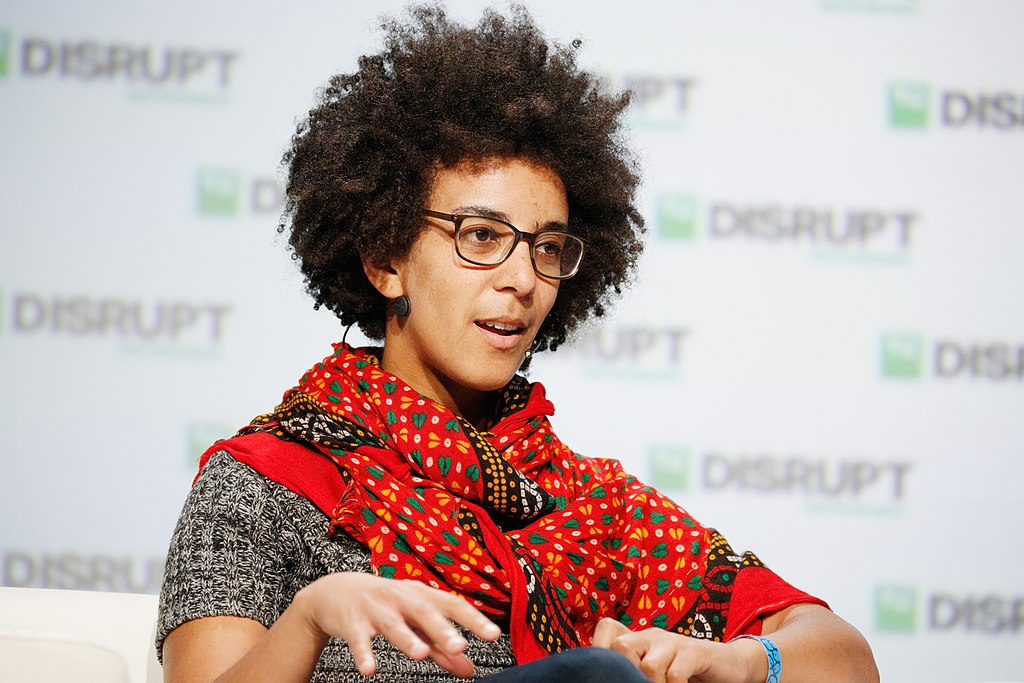
Image: TechCrunch, CC BY 2.0, via Wikimedia Commons
On the evening of Wednesday, December 2, Timnit Gebru, the co-lead of Google’s ethical AI team, announced via Twitter that the company had forced her out.
Gebru, a widely respected leader in AI ethics research, is known for coauthoring a groundbreaking paper that showed facial recognition to be less accurate at identifying women and people of color, which means its use can end up discriminating against them. She also cofounded the Black in AI affinity group, and champions diversity in the tech industry. The team she helped build at Google is one of the most diverse in AI and includes many leading experts in their own right. Peers in the field envied it for producing critical work that often challenged mainstream AI practices.
A series of tweets, leaked emails, and media articles showed that Gebru’s exit was the culmination of a conflict over another paper she coauthored. Jeff Dean, the head of Google AI, told colleagues in an internal email (which he has since put online) that...
Related Articles
By Alexandra Minna Stern, Los Angeles Review of Books | 09.26.2026
This is the 17th installment in the Legacies of Eugenics series, which features essays by leading thinkers devoted to exploring the history of eugenics and the ways it shapes our present. The series is organized by Osagie K. Obasogie in...
By Gaia Ghirardi, Arno Van Hootegem & K. Paige Harden , Nature Human Behaviour | 09.21.2026
Embryo screening for behavioural traits is no longer speculative. If you want to become a parent in the USA today, you can pay to use pre-implantation polygenic testing (PGT-P) of in vitro fertilization (IVF)-created embryos. PGT-P promises to optimize offspring...
Artificial Intelligence (AI) has been a major focus of news recently, as it should have been, under the appropriately ridiculous name of Hugging Face, “a leading collaboration platform and community hub for machine learning, artificial intelligence, and data science.” In July, Hugging Face was hacked. The platform itself responded:
Earlier this week, we detected and responded to an intrusion into part of our production infrastructure. This one was different from anything we had handled before in one important way...
By Ryan Cross, Endpoints News | 09.02.2026
The deaths of two children who received CRISPR therapies in China have rattled scientists who work on similar genetic medicines in the US, adding new fuel to a yearslong debate about the danger of the gene therapy field’s most-used delivery...



.jpg)