
Chinese Scientist Ostracized Over Gene-Edited Babies Seeks Comeback
By Liyan Qi and Jonathan Cheng,
The Wall Street Journal
| 03. 26. 2025
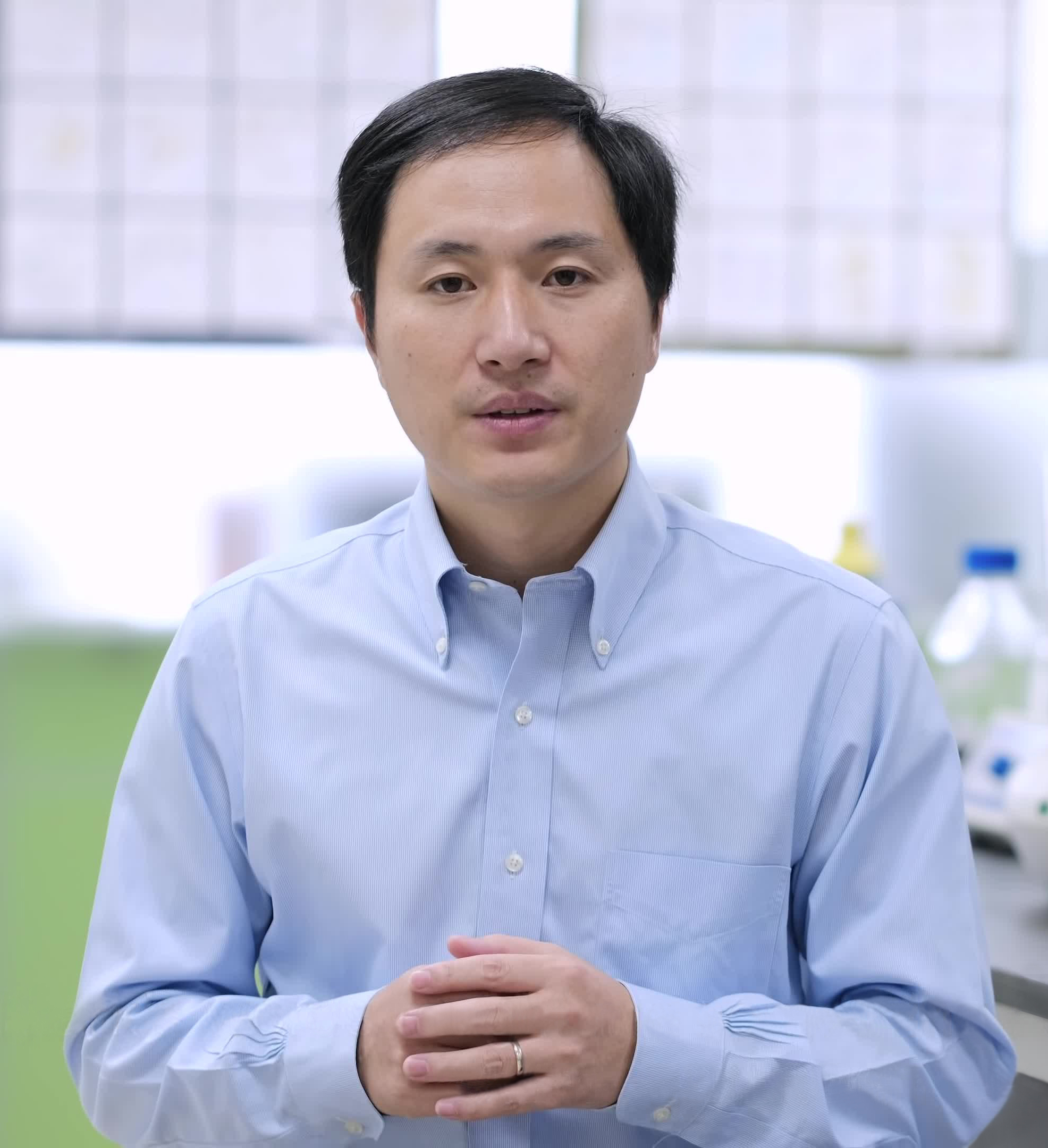
photo via Wikimedia Commons licensed under CC by 3.0
Chinese scientist He Jiankui set off global outrage and landed in prison after he skirted ethical guidelines and claimed he had produced genetically modified babies designed to resist HIV infection.
Now, the self-styled gene editing pioneer is trying to stage a comeback with another controversial project, aiming to use gene editing to prevent Alzheimer’s disease in future generations.
One monumental hurdle: gaining the trust of a scientific community that treats him as a pariah.
International media has dubbed him “China’s Frankenstein.” He has no academic affiliations. He declines to reveal where his funding comes from or who his backers are. It isn’t helping that he won’t repudiate his controversial approach. On March 11, He posted on X that “Ethics is holding back scientific innovation and progress.”
At his Beijing home in a gated compound, a relaxed He outlined his plans for a scientific comeback. He can’t travel—he said China won’t renew his passport—but hopes to send two Chinese colleagues to the U.S. to conduct research on mice and monkeys for the Alzheimer’s project...
Related Articles
Media coverage of recent developments in embryo gene editing might seem to suggest that gene-edited babies are close to becoming a reality. As tech billionaires eager to profit off of techno-eugenics invest in “designer baby” technologies, attempts to normalize heritable genome editing – which remains unsafe and raises significant ethical and societal concerns – are especially dangerous. It’s worth taking a closer look at these developments and what they mean, in a way that pushes back on narratives normalizing the...
By Roxanne Khamsi, The Atlantic | 07.07.2026
When Ludivine Verboogen and Romain Alderweireldt’s third child was born in Belgium in late 2015, they marveled at his long fingers. Perhaps one day he will be a famous pianist, they thought. But soon Ludivine grew worried that her son...
By Carl Zimmer and Marco Hernandez , The New York Times | 07.01.2026
Scientists have long dreamed of discovering the alchemy by which chemicals can be turned into life. On Wednesday, a team at the University of Minnesota announced that it had taken a major step toward that vision.
Blending together dozens of...
By Michael Le Page , New Scientist | 06.25.2026
We now know the master gene that controls embryonic development in people. Called NANOG, its role has been identified by making precise changes to the DNA of fertilised eggs using a technique called CRISPR base editing.
The discovery might lead...