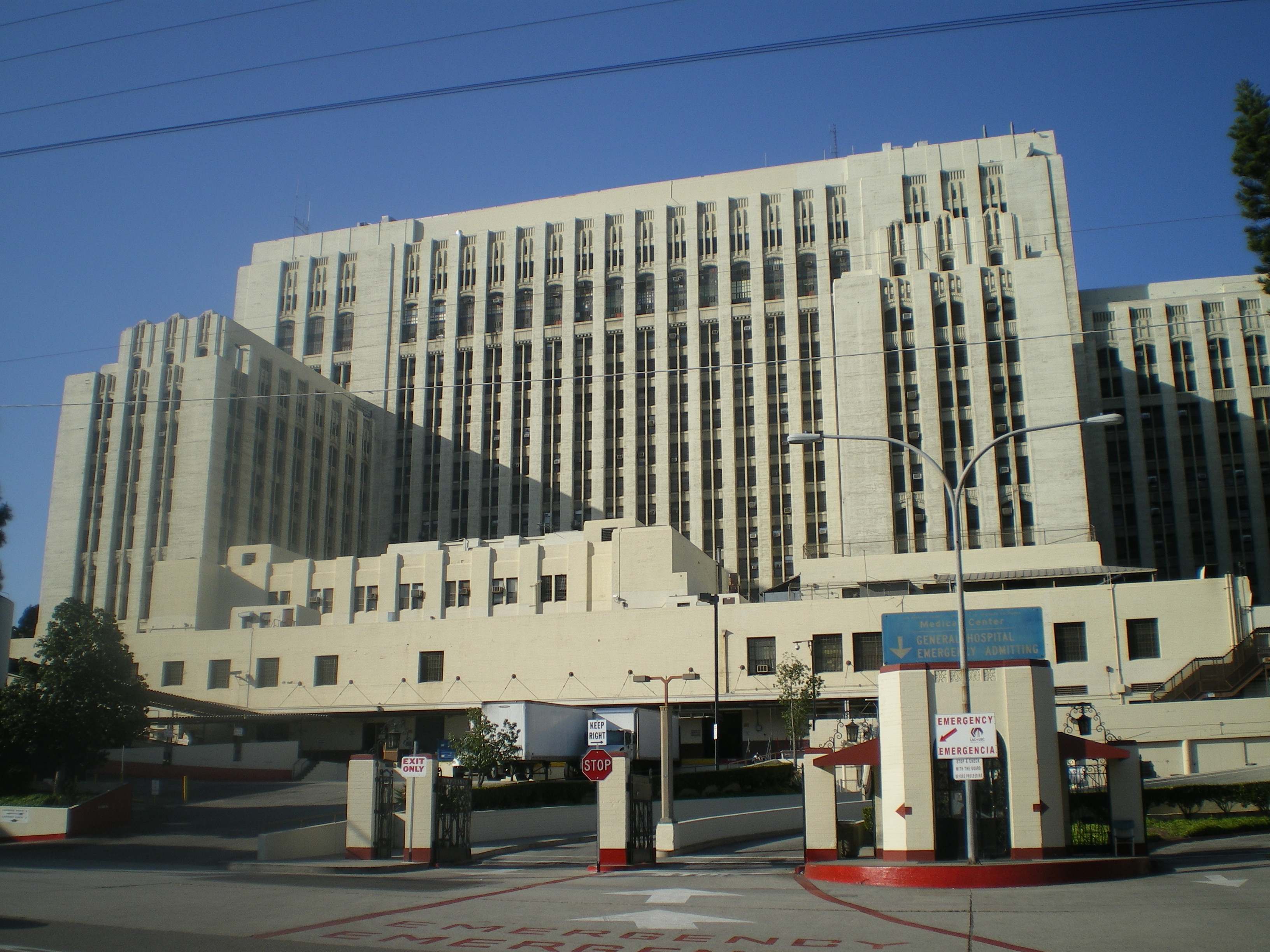
California needs to repair the damage from its history of systematic sterilizations
By Janelli Vallin,
Cal Matters
| 01. 07. 2021
This image is distributed under the CC-BY 2.0 license.
When my family and I would drive past Los Angeles County-USC Medical Center when I was young, I never thought much of it. But when I learned that it was the site of the systematic sterilization of working-class women of Mexican origin in the 1970s, I’ve never looked at it the same way again.
As I pass this building now, I think a lot about my Latinx heritage and what it means to be born in a country that thinks people who look like me and my family aren’t worthy of the right to build our own families.
As a public health researcher at the University of California, San Francisco, who specializes in sexual and reproductive health, I’ve learned that California is not exempt from the horrific historical legacy of eugenics that is embedded in our nation. This history is personal to me as a daughter of immigrants. But it’s something all of us need to reckon with.
Our state needs to learn from this history, reckon for these human...
Related Articles
Artificial Intelligence (AI) has been a major focus of news recently, as it should have been, under the appropriately ridiculous name of Hugging Face, “a leading collaboration platform and community hub for machine learning, artificial intelligence, and data science.” In July, Hugging Face was hacked. The platform itself responded:
Earlier this week, we detected and responded to an intrusion into part of our production infrastructure. This one was different from anything we had handled before in one important way...
By Gay Pasley, Essence | 09.04.2026
That is what makes the unfolding case of McKenna West so important. It is more than a disagreement about abortion or a dispute over a surrogacy contract. It asks whether an agreement signed before a pregnancy can become authority...
By Anna L. Philippe, Pop Panic | 09.17.2026
What does it mean when education is considered a threat to population? As an education student, I am interested in the ways population panics are essentialized and circulated in formal education settings. Schools can play a major role in shaping...
By Ava Kofman, The New Yorker | 09.15.2026
A WOMAN WHO ACTS AS A SURROGATE, carrying a child for someone else, is said to be going on a “journey.”
Kayla Elliott started her surrogacy journey at the age of twenty-six. She gave birth to a baby girl for...