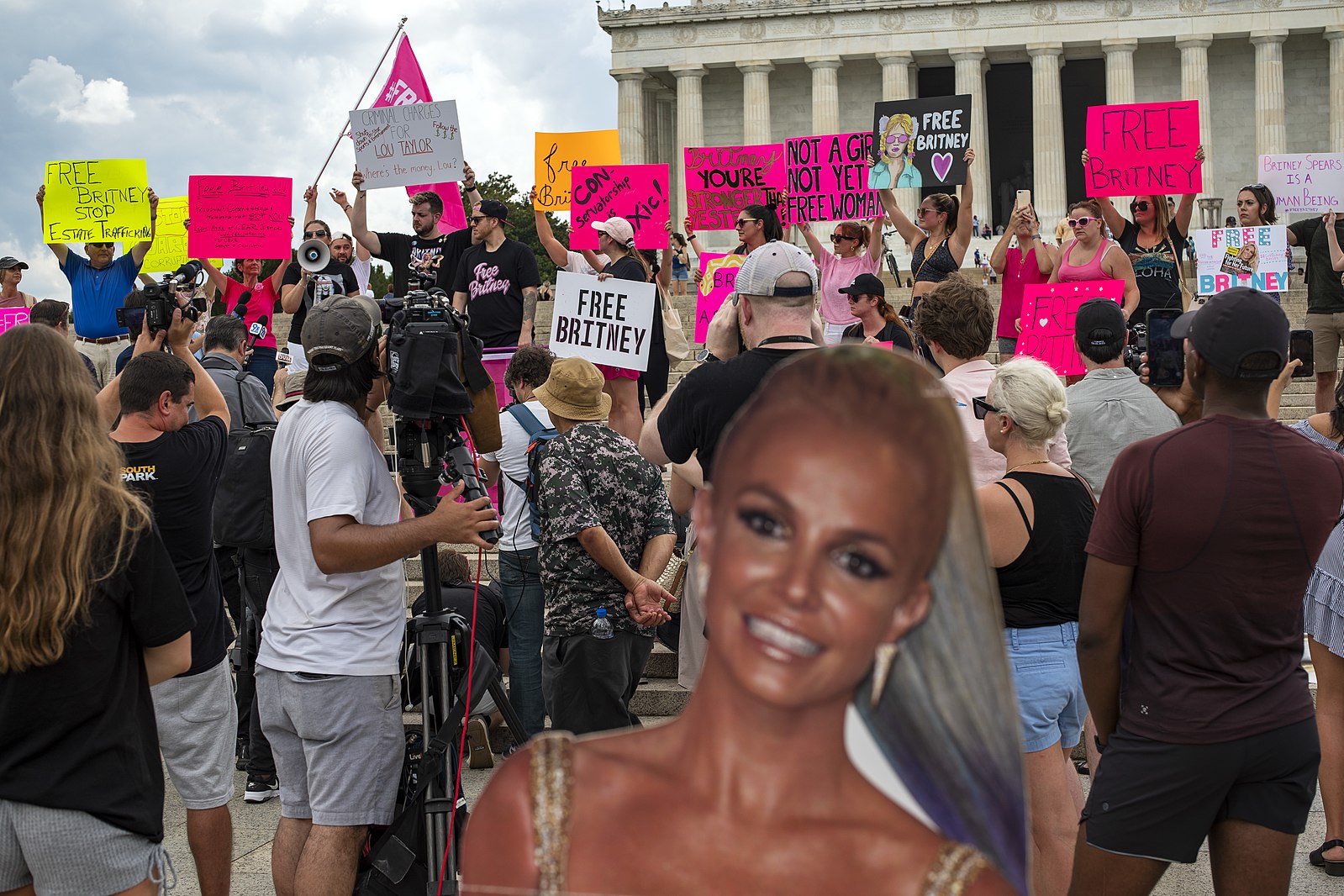
Britney’s conservatorship is one example of how the legacy of eugenics in the US continues to affect the lives of disabled women
By Michaela Kathleen Curran,
The Conversation
| 10. 01. 2021
Photo by Mike Maguire on Flickr
Britney Spears has been locked in a court battle 13 years in the making. While her father was suspended as conservator of her estate on Sep. 29, 2021, her conservatorship might not be terminated until the next hearing on Nov. 12.
During this conservatorship, she was limited in her ability to make everyday choices that most people take for granted.
One revelation that came out of Spears’ emotional testimony was that she was not allowed to go off birth control.
“[T]his so-called team won’t let me go to the doctor to take [my IUD] out because they don’t want me to have children — any more children,” Spears said.
Spears’ anguish over the loss of her reproductive agency was palpable. And her story is one shared by disabled women across the country who are denied the right to make decisions about their sexual and reproductive health.
Ensuring the reproductive rights of disabled women is a professional and personal issue for me. I am a public health researcher at the University of Iowa studying the...
Related Articles
By Rob Stein, NPR [cites CGS' Katie Hasson] | 09.29.2026
Cathy Tie slips on a white lab coat bearing her name and the logo of her startup: Origin Genomics. "Welcome!" she says as she leads an NPR reporter, photographer and videographer on an exclusive tour of Origin's labs located...
By Alexandra Minna Stern, Los Angeles Review of Books | 09.26.2026
This is the 17th installment in the Legacies of Eugenics series, which features essays by leading thinkers devoted to exploring the history of eugenics and the ways it shapes our present. The series is organized by Osagie K. Obasogie in...
By Marcia Langton, National Indigenous Times | 09.22.2026
Pauline Hanson speaking about Aboriginal people on a white Christian podcast last year said "they're the most primitive race on Earth and we're supposed to be holding them up and saying what they've achieved? They've achieved nothing." She resurrected the...
By Erik Adams, Sundance | 09.08.2026
The scariest movie playing at the 2026 Sundance Film Festival isn’t about cursed audio recordings or a killer demon disguised as your true love; rather it’s a 110-minute essay film about how a handful of guys obsessed with numbers and...