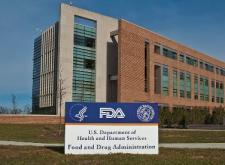
Why is Congress trying to weaken the FDA's oversight of dangerous drugs?
By Michael Hiltzik,
Los Angeles Times
| 05. 19. 2016
Untitled Document
The drug industry blames the Food and Drug Administration for driving up the research and development costs of new drugs, stifling innovation, and interfering with the sainted mandate to bring cures to suffering medical patients.
The nation's public research agencies, especially the National Institutes of Health, complain they're starved for money.
Put those together, and you get the elements of what drug industry watchdog Ed Silverman calls a "grand bargain": Congress will step up funding for the NIH in return for a loosening of regulatory standards at the FDA. Silverman thinks this is an offer the American public should refuse. He's right.
Nevertheless, a deal is in the making on Capitol Hill. Last month, Senate Health Committee Chairman Lamar Alexander (R-Tenn.) announced "progress" on stepping up funding for NIH initiatives on cancer research and other important goals. He tied that funding implicitly to passage of a version of a 2015 House bill that would provide $8.8 billion for the NIH but also loosened the FDA's reins on the drug industry.
But as many experts have observed since the House passage, increasing funds for the...
Related Articles
Artificial Intelligence (AI) has been a major focus of news recently, as it should have been, under the appropriately ridiculous name of Hugging Face, “a leading collaboration platform and community hub for machine learning, artificial intelligence, and data science.” In July, Hugging Face was hacked. The platform itself responded:
Earlier this week, we detected and responded to an intrusion into part of our production infrastructure. This one was different from anything we had handled before in one important way...
By Gay Pasley, Essence | 09.04.2026
That is what makes the unfolding case of McKenna West so important. It is more than a disagreement about abortion or a dispute over a surrogacy contract. It asks whether an agreement signed before a pregnancy can become authority...
By Anna L. Philippe, Pop Panic | 09.17.2026
What does it mean when education is considered a threat to population? As an education student, I am interested in the ways population panics are essentialized and circulated in formal education settings. Schools can play a major role in shaping...
By Ava Kofman, The New Yorker | 09.15.2026
A WOMAN WHO ACTS AS A SURROGATE, carrying a child for someone else, is said to be going on a “journey.”
Kayla Elliott started her surrogacy journey at the age of twenty-six. She gave birth to a baby girl for...