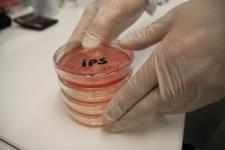
Stem cell factory opens door for trials of personalized diabetes treatment
By Andrew Joseph,
Stat News
| 06. 16. 2016
In a step that could lead to a new diabetes treatment, several Boston-area hospitals have teamed up with the Harvard Stem Cell Institute and biotech Semma Therapeutics to make personalized cell-based therapies and organize clinical trials.
It is one of several initiatives around the country aimed at manufacturing cell-derived treatments, as the hope for such therapies creates a demand for the production of the cells.
In patients with type 1 diabetes, the immune system attacks the pancreatic cells that produce insulin, called beta cells. Doctors have for years transplanted beta cells from dead donors into patients, but the supply is insufficient for the millions of people with type 1 diabetes, and patients’ bodies sometimes reject the donor cells.
Continue reading on STAT News
Image via Wikimedia
Related Articles
Artificial Intelligence (AI) has been a major focus of news recently, as it should have been, under the appropriately ridiculous name of Hugging Face, “a leading collaboration platform and community hub for machine learning, artificial intelligence, and data science.” In July, Hugging Face was hacked. The platform itself responded:
Earlier this week, we detected and responded to an intrusion into part of our production infrastructure. This one was different from anything we had handled before in one important way...
By Gay Pasley, Essence | 09.04.2026
That is what makes the unfolding case of McKenna West so important. It is more than a disagreement about abortion or a dispute over a surrogacy contract. It asks whether an agreement signed before a pregnancy can become authority...
By Anna L. Philippe, Pop Panic | 09.17.2026
What does it mean when education is considered a threat to population? As an education student, I am interested in the ways population panics are essentialized and circulated in formal education settings. Schools can play a major role in shaping...
By Ava Kofman, The New Yorker | 09.15.2026
A WOMAN WHO ACTS AS A SURROGATE, carrying a child for someone else, is said to be going on a “journey.”
Kayla Elliott started her surrogacy journey at the age of twenty-six. She gave birth to a baby girl for...